Friday, May 29, 2015

Productive Debate on FIFA's Future

Now that Sepp Blatter has won a fifth term and the US and Swiss prosecutors are hard at work with who-knows-what-might-happen-next, it might be a good time to debate what kind of FIFA we'd collectively lie to see in the future. Having this debate may prove a challenge.

Consider this very recent tiff.

Over at FiveThirtyEight Nate Silver proposed one model for a new, breakaway soccer association:
But what if you used the 34 OECD members as the foundation of a new football federation? The OECD doesn’t include Russia but does have most of the large European economies, including Germany, the U.K., France, Italy and Spain. It also has the United States and a foothold in the Asia-Pacific region (Japan, South Korea, Australia) and Latin America (Mexico, Chile). These OECD members account for more than 60 percent of the GDP-weighted World Cup audience and about 80 percent of the club-team representation in the 2014 World Cup.

Convince Brazil and Argentina to join the breakaway foundation, and you’re doing even better. You’d be up to almost 70 percent of the GDP-weighted World Cup audience, and you’d have 11 of the 16 countries that advanced to the knockout stage of last year’s World Cup.
Silver's proposal drew the ire of Branko Milanovic, CUNY professor and former World Bank economist:
The piece illustrates that a combination of good statistics with lack of knowledge of history, produces useless results. It is as if one were to study today’s racial wage gap in the US without knowing that there ever was slavery.

But let us consider the key part of Nate’s idea. He thinks that a new FIFA should be formed of the countries that bring most money to the current FIFA and the rest should be left out in the cold. Let the poor countries with awful soccer turfs, with these miserable human creatures that cannot pay $100 per game, stay out on their own, and keep on playing their game on dirt fields, not seen on TV screens or by anyone else except their neighbors. In the  meantime, we the new rich and shiny FIFA will come to the game in our Audis and Mercedeses, and play on the impeccable fields full of fun commercials, and shall flood every TV screen of every nation in the world.

The  importance  of countries reflects, Nate says, how much money they bring to FIFA. If a country is rich, populous and lots of people watch the World Cup, and thus add to FIFA’s revenues, then that country should matter more. OECD is big and rich enough to go it alone. 
Do go read both pieces in full. Both make some interesting points, but neither really helps to clarify options, much less expand them into new possibilities. A debate over FIFA's future, of course, is one worth having -- and judging by Milanovic and Silver's Twitter exchanges, probably not on Twitter.

The essential issue here was well characterized by Stefan Szymanski in an earlier post at Reuters:
Perhaps most worryingly for FIFA and the future of the World Cup, it’s not even clear that people around the world agree on the meaning of corruption. This is a culturally sensitive issue. Kickbacks and bribery are a normal part of doing business in many countries, as documented by watchdog Transparency International. But even within the United States, in many cases it is the norm to pay individuals a gratuity for making things happen. When you tip a waiter or doorman you don’t expect the sum to be public or the transaction to be considered a bribe, even if you follow your tip with “Now please find me the best table.”

In northwest Europe and the United States, we have now drawn a sharp distinction between this legal activity and the illegal activity of giving gratuities to public officials or individuals involved in arms-length transactions. Not everyone in the world thinks like this. No doubt there are executives inside FIFA who, until now, have thought of themselves as “clean,” but must be wondering if any of their actions might be actually be legal. After all, the Justice Department says, “this indictment is not the final chapter in our investigation.”

Building a coalition on a global scale — and that’s what the World Cup and FIFA really is — requires immense compromises, and often a willingness not to look too deeply into what is going on. Most people might applaud the Justice Department’s assault on the worst excesses of FIFA. But if this investigation goes much deeper, resistance from the members of the FIFA congress might stiffen. The warring parties might break up into regional blocs, and the World Cup itself might be the victim. If that is the price of justice, some might say, then it is a price worth paying.
Options for FIFA's future are not at all comparable, as Silver analogizes, to spinning off the Premier League from lower divisions in English soccer in the early 1990s. Nor is it comparable, as Milanovic has it, to deciding on the proper form of global governance. Such perspectives do more to muddle than clarify.

FIFA is a sports association, with a long history and complex politics. That people around the world care so deeply about soccer is wonderful. However, considerations of options for improving FIFA won't benefit from oversimplifying the politics and culture, nor from overstating the significance of FIFA's governance structure. And our discussion of options won't benefit from snark on Twitter. Any discussion of FIFA's options going forward must be well attuned to politics, history, culture, data, and realize that people will fundamentally disagree about many of these things.

In fact, achieving disagreement would be a sign of process. At the moment, before (the) other investigative shoe(s) drop(s), we have an opportunity to engage in a thoughtful debate about options for FIFA's future. Clarity on options may prove useful at some point in the future. Big wigs like Silver and Milanovic can help that debate to happen, or not.

Tuesday, May 26, 2015

Circular and Irrelevant Scientific Reasoning in "Sex Testing" Debates

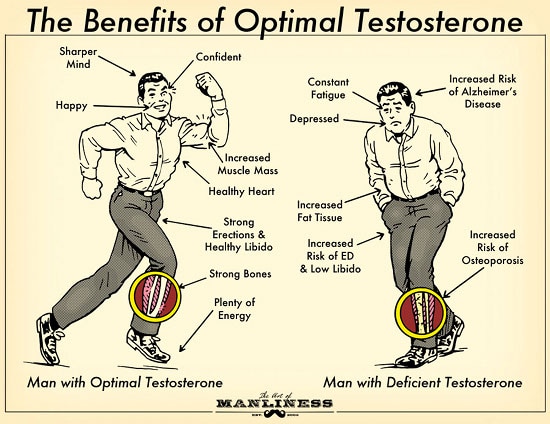
In the current issue of Science Katrina Karkazis and Rebecca Jordan-Young have a Policy Forum on the measurement of testosterone in male and female athletes. The article makes one excellent point but it also confuses issues of sex and gender in the arena of "sex testing" for determining qualification to participate in elite sports as male or female.

First the excellent point.

Karkazis and Jordan-Young observe the fundamental circularity involved in quantifying testosterone levels in male and female athletes. A necessary methodological step is to identify who is male and who is female before doing the comparison. But if testosterone is used as a distinguishing characteristic, then any "scientific" test will simply serve as a mirror to the classification scheme, hence the circularity.

No scientific test can tell us who is male and who is female. Thus, it is confusing for Karkazis and Jordan-Young to engage in a debate over the science of testosterone levels as a marker of sexual categorization. They seem to first accept testosterone as a marker of sexual categorization by challenging the science of testosterone.

I think it is far better to simply point out that the science, while interesting, is just irrelevant. Here is what I write about that in my paper on "sex testing";
While there is an ongoing debate over the effects of testosterone on athletic performance, here I depart from some of the critics of the IAAF policy. I argue that testosterone simply does not matter -- not scientifically -- but practically. Let us suppose for the sake of argument that some women have testosterone levels which fall into a range that is far more populated by men. Let us further suppose that this amount of testosterone can be associated with some greater athletic achievement, say speed or strength. The appropriate response is “so what?”

Imagine the previous paragraph rewritten with “height” substituted for “testosterone.” There are notable examples of female athletes with exceptional height, generally attained only by men, who achieved notable sporting successes. Further, challenging the exact role of testosterone in athletic performance gives standing to the IAAF/IOC policies that they do not deserve. The role of naturally occurring testosterone in a woman is no more significant than hereditary polycythemia. The role of naturally-occurring testosterone in athletic performance is scientifically interesting, but it is inherently no more relevant to athletics policy than any other naturally occurring characteristic of the human athlete, man or woman.
Now the confusing part. Karkazis and Jordan-Young write:
... it is widely recognized in medicine, law, and the social sciences that when people are born with mixed markers of sex (e.g., chromosomes, genitals, gonads), the medical standard is that gender identity is the definitive marker of sex—there is no better criterion.
I know (from experience) that the writing of a Policy Forum for Science requires brevity in words and nuance can be lost. But in this case I think that Karkazis and Jordan-Young have sacrificed accuracy for brevity.

Sex and gender are indeed different concepts, and they are not interchangeable. They probably mean to say that "gender identity is the best tool available for distinguishing elite athletes into categories for purposes of competition." But they didn't and this may be confusing to readers not immersed in this issue.

Karkazis and Jordan-Young hint at this more accurate framing in their conclusion when they suggest, quite correctly, that gender is a social construction and so too are the categories that we separate men and women into for purposes of competition. However, once you accept that fact -- and social construction is a fact (for all you post-modernists;-) -- then all of the debate over the science of testosterone as a marker of male-ness and female-ness become pretty much irrelevant.

However, the urge to debate policies through science is a strong one.

Evaluation of Skill in 2014/2015 EPL Predictions

Over at Sporting Intelligence my latest column is up. In it I review the skill of 60 predictions of the 2014/2015 EPL season.

Head on over there to read it, and feel free to return here if you have any questions on comments.

Bottom line? Skillful prediction is really, really difficult,

Thursday, May 21, 2015

A Problem with 538's NBA ELO Time Series

UPDATE 22 May: FiveThirtyEight doubles down on this flawed methodology with a follow-up post that makes the erroneous thinking inescapable. Not good.

The ESPN website FiveThirtyEight (disclosure: I wrote a handful of pieces for them in 2014) has just put up a time series of ELO rankings for NBA (and also now defunct) basketball teams. The effort is notable but deeply problematic. Consider that the ELO rankings produce the following:

1949 Chicago Stags: 1577 (pictured above)
2015 New York Knicks: 1256

Raise your hand if you think that the 1949 Stags (a fine team no doubt) would be favored to beat the 2015 New York Knicks!

The problem is that ELO is constrained to an average value of 1500 over time, thus removing the signal of any trends, variability or non-stationarity in the league performance.

ELO is a tool for contemporary comparison, and is not well suited for presentation as a time series because the baseline changes over time. I'd guess over the long term it has changed so that teams get better, on average, as compared with those of the  past. But certainly there is variation in the overall competitive level of the league, which ELO does not capture.

So when 538 says that the 1996 Chicago Bulls were "the best ever there ever was," what this really means is that they were relatively the best team ever, in comparison to the competition that they faced in 1996. That is a bit different than saying they are "the best that ever was." Producing a time series of ELO is thus fundamentally flawed.

In other words, an average ELO team in 2015 at 1500 is not at all comparable to an average ELO team at 1500 in 1949. The 2015 New York Knicks, as awful as there were in 2015, would probably beat the 1949 Chicago Stags by about 100 points.

Thus, rather than reporting absolute ELO scores 538 might have reported anomalies from the long-term average, to present a team's relative ranking, thus removing the need for consideration of any trend. Not as cool as a long-term ranking, but more accurate.

It is a good first effort, but needs some work!

Tuesday, May 19, 2015

Gatlin's Geriatric Sprinting Exceptionalism

The graph above shows sprint times for 100m for 10 top sprinters, by age. The data comes from the IAAF (which hosts a fantastic array of easily accessed data). The sprinters include those with the 9 fastest times ever recorded (< 9.84 seconds) plus Carl Lewis. More sprinters could be easily added.

I was motivated to compile the data by this post today by Ross Tucker at his excellent Science of Sport blog. Tucker discusses the interesting case of Justin Gatlin the US sprinter who at age 33 is running faster than he ever did when younger. Gatlin's circumstances are interesting (right euphemism?) because he served a 4-year ban for doping from 2006 to 2010 for steroids. He is of course not the only athlete on this graph who has been punished for doping.

Tucker explains why Gatlin's circumstances provoke interest:
Since his return in 2010, he has run faster every single year, and claimed six of the seven fastest times in 2014.  He also had the two fastest 200m of the year, including a double at the Brussels Diamond league event where he ran 9.77s and 19.71s on the same evening.

Impressive stuff, and just what the sport needs – a challenger to Usain Bolt (and the other Jamaicans) as we build towards the Rio 2016 Olympics, and Bolt’s quest to claim a third sprint double.

Except, there’s that nagging, not insignificant doping problem around that challenger. Gatlin is the problem that will not go away. . . .  he is a former doper, dominating a historically doped event, while running faster than his previously doped self.
Motivated by Tucker's post I thought I'd look at some data.

The graph shows that these top sprinters pretty uniformly improved their sprint times until ages 25-27.  The average age for career-best time is just over 26 and the average age for 2nd career best time is just under 26. Gatlin's career best (so far) came last week at age 33 and 2nd career best at age 32. At the same meet in Doha that Gatlin won, 39-year old Kim Collins came in 4th at 10.03.

In fact, none of these athletes ran a faster 100m after age 27 than they did at 27 or before (except Richard Thompson who ran faster at 29). Tucker points to a few athletes who had career bests in their 30s. Gatlin, of course, wasn't running (for time) at age 27 since he was serving a doping suspension. We can imagine all sorts of ways to connect the dots between the two red curves in the graph, consistent with a range of possible story lines. Here are a few:
  • He might just be the greatest sprinter in history, in terms of longevity and sustained performance (just look at Usain Bolt's curve), who ran into some really bad luck.
  • He might be, as Tucker and others mention as possible, still benefiting from past doping, suggesting that short-term bans aren't really up to the task.
  • He might be doping today, and has figured out how to evade the testers. 
We will be hearing more about Gatlin and doping to be sure.

A Model for Sharing Licensing Value with College Athletes

On Twitter, Steve Berkowitz (of USA Today @byberkowitz) shared the image above from a presentation given by Doug Allen to the Knight Commission on College Athletics.

The slide shows a proposal for group licensing of players' name and image right. The proposal has a lot in common with an idea that I have aired to model college athlete compensation for their "intellectual property" in much the same way that universities manage IP for professors and other researchers. Allen's proposal suggests that others are also thinking about creative ways to align incentives in a positive way.

Here is my proposal in more detail:
What the NCAA can learn from Bayh-Dole

College sports are facing a crisis. A group of about two dozen current and former college athletes, led by former UCLA basketball star Ed O’Bannon have sued the National Collegiate Athletics Administration. The athletes argue that licensing revenues generated by the NCAA using the images and likenesses of specific players should be shared with those players. In the coming weeks a federal judge will decide whether to certify the case as a class action, which would then bring into the case many thousands of former and current college athletes.

If that were to occur, then the NCAA and universities could be responsible for paying billions of dollars to college athletes. In 2012, the top 5 college athletic conferences collectively received over $1 billion in television revenue for football and the March Madness spring post-season basketball tournament operates under a 14-year, $10.8 billion television agreement. March Madness alone generated more than a billion dollars in TV ad revenue, exceeding that of the National Football League, the National Basketball Association and Major League Baseball. Johnny Manziel, the Texas A&M quarterback who won the Heisman Trophy last year, generated an estimated $37 million in publicity for his university last year.

With the magnitude of the financial stakes, it is only a matter of time before the dam breaks and the notion of the “scholar-athlete” who plays only for school pride and a scholarship becomes a thing of the past. Rather than wait for a court decision, a labor action by high profile athletes or other possible revolutionary changes, the NCAA and universities can get ahead of this issue by paying attention to the lessons of history very close to home.

In 1980 the US Congress passed what the Economist called in 2002 “possibly the most inspired piece of legislation to be enacted in America over the past half-century.” The Bayh-Dole Act changed property rights with respect to the discoveries made in universities as a result of federally funded research. Prior to 1980 the US government retained ownership of the intellectual property associated with discoveries which resulted from federal research and development. Very few of the patents owned by the federal government were being been commercialized, and policy makers sought a way to better capitalize on the billions of dollars in federal R&D taking place at universities.

Under the law, professors and other university researchers who create intellectual property gain a share in its rewards, thereby creating strong incentives both to discover and to commercialize. In the two decades following the passage of Bayh-Dole US universities increased their patents by 1,000% and added an estimated $40 billion annually to the economy. At the same time, the law ensured that technology transfer activities on campus would be closely monitored to ensure that the mission of universities was not compromised.

So what does Bayh-Dole tell us about college athletics? Several years ago, former Senator Birch Bayh explained why the Bayh-Dole Act works: “it aligns the interests of the taxpaying public, the federal government, research universities, their departments, inventors, and private sector developers transforming government supported research into useable products.”

The NCAA and universities should explore aligning the interests of scholarship athletes, university campuses, the NCAA and the sports public with the incredible revenue potential of college sports. Assigning to universities the intellectual property rights of athletes which play under their names while creating a revenue-sharing model with those athletes would meet this need. Just as occuered with respect to the faculty, such an approach would encourage the further generation of revenue from sports, creating a windfall for many college athletic programs, some of which are strapped for cash, and deliver deserved rewards to the scholarship athletes who play the games.

A revenue-sharing model has served college faculty who conduct research and their home universities very well over more than three-decades. Universities should get to work on adopting a similar model for its athletes, before change is forced upon them, perhaps abruptly.

Tuesday, May 5, 2015

German TV Crew Investigating FIFA Arrested and Detained in Qatar

A television crew was arrested, interrogated and had its equipment deleted and destroyed by Qatari authorities while filming a documentary about the 2022 World Cup.

A reporter, cameraman, camera assistant and driver were denied permission to leave the Gulf state for five days after capturing footage of labour camps there for a programme called The Selling of Football: Sepp Blatter and the Power of Fifa.
The reporters were released and their equipment destroyed:
[Florian] Bauer and his team were arrested on March 27, a day after arriving in Qatar, and were held for 14 hours before being released at 4am the following morning.

Admitting he was “scared”, Bauer said: “There were interrogations by people from the intelligence service who said if I didn’t co-operate with them, it would work badly for me.”

The crew was physically unharmed, which could not be said for its equipment.

Bauer added: “Everything was deleted: phone, hard drives. A laptop got destroyed, got opened by I don’t know who.”
The press freedom watchdog Reporters Without Borders ranks Qatar 155th out of 180 countries in terms of press freedom.  Reporters Without Borders argues that with hosting the World Cup comes certain responsibilities:
"Any country with major sporting events such as Qatar seeks the international stage, it is also important that global public be allowed to ask questions." (translated)
For its part, the Qatari government explained that the arrests had nothing to do with FIFA or the World Cup, but occurred to the fact that filming was taking place without required permits. This seems rather circular as the reporters requested permits to film and were ignored. So they proceeded anyway.

Continuing revelations about the Qatar bid to host the World Cup and working conditions within Qatar continue to hound FIFA and the Qatari government. The latest episode adds to the list. The German documentary is set to air next week. FIFA and Qatar can be sure that it will get many more viewers thanks to the arrested journalists. FIFA has apparently not commented.

Monday, May 4, 2015

A Content Analysis of ESPN's Draft Coverage - Evidence of Racial Bias?

At Vice Sports @A_W_Gordon has a fascinating post on the language used to described football players during 15 hours of ESPN's coverage of the 2015 NFL draft.  Content analyses is a powerful tool to reveal focus of attention as well as the key terms used in communication.

Here is a word cloud of terms used by the ESPN hosts only to describe black football players (with the size of the word proportional to its frequency):
And here is a word cloud for those terms used exclusively to describe white players:
Gordon writes:
. . . feel free to stare at this for as long as you want, but let's do a quick breakdown. Only black players were described as: gifted, aggressive, explosive, raw, and freak. Only white players were described as: intelligent, cerebral, fundamentally, overachiever, technician, workmanlike, desire, and brilliant.
In 2014, Deadspin (Gordon and colleagues) did a similar analysis with similar results.

There is also a substantial academic literature on this subject. For instance:
  • Rainville, R. E., & McCormick, E. (1977). Extent of covert racial prejudice in pro football announcers' speech. Journalism & Mass Communication Quarterly, 54(1), 20-26.
  • Tyler Eastman, Andrew C. Billings, S. (2001). Biased voices of sports: Racial and gender stereotyping in college basketball announcing. Howard Journal of Communication, 12(4), 183-201.
  • Billings, A. C. (2004). Depicting the quarterback in black and white: A content analysis of college and professional football broadcast commentary. Howard Journal of Communications, 15(4), 201-210.
And more recently:
  • Angelini, J. R., Billings, A. C., MacArthur, P. J., Bissell, K., & Smith, L. R. (2014). Competing Separately, Medaling Equally: Racial Depictions of Athletes in NBC's Primetime Broadcast of the 2012 London Olympic Games. Howard Journal of Communications, 25(2), 115-133.
  • Schmidt, Anthony, and Kevin Coe. "Old and New Forms of Racial Bias in Mediated Sports Commentary: The Case of the National Football League Draft." Journal of Broadcasting & Electronic Media 58.4 (2014): 655-670.
How we talk about sport tells us something about society beyond sport, and the resulting image is not always so pretty.

Tuesday, April 28, 2015

Kentucky Derby Times and Performance Limits

The graph above comes from a column I had at FiveThirtyEight one year ago. In it I looked at the data on winning times in the Kentucky Derby. Here is the interesting fact which prompted the column:
Since 1949, the time it takes thoroughbreds to run around the 1.25-mile track has averaged 2:02.25, and no winning race time has deviated by more than 3 seconds
Interestingly, horse speeds have plateaued but human speeds have not. Doping? Genetics? Sport science?
The 2014 race, run a few days after my column, played out true to form with California Chrome's winning with a time of 2:03.66.

Have a look at my column for a discussion.

Friday, April 24, 2015

Is the MLS Sustainable?

Stefan Szymanski, professor at the University of Michigan and author of the forthcoming book Money & Soccer, has written a post questioning the sustainability of the business model of Major League Soccer, The post has attracted considerable discussion and debate, as it cuts right to the issue of the long-term prospects for professional soccer in the United States.

Let's cut to Szymanski's bottom line -- after reviewing data and estimates for MLS revenues and expenditures he concludes for 2014:
Overall we arrive at an annual loss of $139 million, or just over $7 million per franchise in 2014. No doubt there are various tax write-offs to soften the blow, especially if losses can be written off against profits in other businesses. But I doubt that would make this a profitable venture overall.
He then surmises that this loss-making situation does not appear likely to change anytime soon, with its impacts softened only by the entrance fees paid to the league for new teams. The bottom line?
You can fund a loss-making enterprise from the entrance fees of new buyers for a while, but without making money, the only reason for doing this would be glory, not profits. Americans constantly tell me that owners of sport franchises in the US will insist on making money. If that really is the case, then I predict that MLS will collapse, and probably sooner rather than later.
His last statement is a conditional, predicated on the desire for owners to make profits. If owners don't care about profits, then of course, Szymanksi is not predicting collapse.

There have been two types of critiques of Szymanski's argument. One is that his numbers are wrong, and MLS is not in fact a "loss-making enterprise." For instance, @kevinmacauley writes at SBNation:
The basic argument of "Giant costs - smaller revenues = big loss, therefore collapse is imminent" only makes sense when you've actually accounted for all revenues. Szymanski hardly got started on that. When someone makes this argument while actually accounting for all revenues, maybe their argument and prediction will be taken seriously.
On his blog Szymanski responded to a similar criticism:
Well, until MLS decides to reveal the books to us we are both speculating. 
A second type of critique focuses on the longer-term prospects of the MLS. Here is an example:
This was always going to be a long term effort with return on investment delayed much longer than your typical stock market play. From an individual team standpoint, losing $5 million dollars per year, 1/20 of that $100 million, the loss is not all that significant when you factor in what these teams, or the league, could be worth 10 years down the road. A $5 million dollar loss per year is peanuts to some of the richest men in sports. Also, TV revenue tripling in 10 years isn’t a bullish thought. The numbers are so low now that it wouldn’t take much to accomplish that. This would more than cover the current losses and that’s before we factor in advertising, sponsorship and other sources of revenue that would naturally increase as well.

If MLS has done anything well, its certainly been the strictness of their cost control. A slow and steady approach has led to an extremely successful league at the ticket window. Once that transfers to television, the sky is the limit.
Arguments about future revenue growth reflect hopes and dreams as much as dollars and cents. The sky may indeed be the limit, and if a profit is to be made then Szymanski's conditional is off in any case. Those critiquing his argument in this manner can just ignore it, and watch the revenues grow year by year.

Here I'll offer a third perspective. Whether MLS is sustainable or not is probably the wrong question. If it is not sustainable, it will collapse -- that is a truism. But if it is sustainable, any realistic assessment of its future would be hard pressed to conclude that it is as "minor league soccer" or, as Simon Kuper recently quipped, as an "elephant's graveyard."

It is just hard to overcome the financial mathematics. Last fall at Sporting Intelligence, I wrote about the staggering wage bill gap between the MLS and the EPL:
On the 2014 [MLS] salary list are 572 players earning total wages of just over $129.5 million. This sounds like a lot of money, and it is. But in comparison to the Premier League, for example, it is small potatoes. The MLS total includes 21 clubs (for 2014 it includes Chivas USA, since folded, and partial squads for NY City FC and Orlando City FC, both being formed). Yet their total wage bills combined equals about the same as the wage bill for Queens Park Rangers ($126 million) in 2012-13, the most recent year’s data available.

In 2012-13, six Premier League clubs each had wages bills well in excess of the entire MLS, with Manchester City topping the list at $376 million (for all club staff). The wage bills for the top 20 clubs in England were almost $2.9 billion combined. For the bottom 20 payers across the Premier League and the Championship it was about $750 million.
The total payroll of the MLS is about 1/15 that of the NHL (data from my new book). Right now the MLS is to global soccer what the Russian professional hockey league is to the NHL -- interesting domestically, but not a threat to the world's top league in any way.

Perhaps there is a way to make MLS more major. Along these lines, Szymanski has previously made an interesting suggestion:
I think the only way around this conundrum is for MLS to become a minor league for Europe and for European teams to buy up MLS franchises. European teams already employ the talent that would make MLS attractive and the big clubs have more talent than they put on the field. Manchester City’s acquisition of the new New York City FC franchise is surely a logical step. Of course, European teams could just loan players to MLS in the same way that they do in Europe, but then there’s the worry that the borrower will not take good care of the asset.
This might be branded as a 2nd-tier Champion's League of sorts, as the clubs with the assets to invest in a minor league farm team would likely overlap significantly with regular Champion's League squads. Such a strategy would also have the advantage of not denying the MLS status as a minor league, but instead, exploiting that fact as a feature.

All this aside, it is great to see Americans debating the MLS, its status and its future. However, in terms of development of soccer talent in the US, I think there are larger issues elsewhere -- like the NCAA, but that will have to await a future post.

Wednesday, April 22, 2015

English Political Constituencies by Football League

Via Philip Cowley, Professor of Parliamentary Government, Nottingham University.

FYI: Red =  Labor, Blue = Conservative, Yellow = Lib Dem

Thursday, April 16, 2015

Poisoned Spikes


Above is the full documentary shown on Kenyan TV channel Citizen Television which claims systemic doping in Kenyan athletics.

WADA has issued a statement here.

Thursday, April 9, 2015

Transparency International on Sport Corruption

Transparency International, a global anti-corruption NGO, today has launched a "Corruption in Sport Initiative." They explain what they are up to:
Sport is a multi-billion dollar business engaging billions of people. It is also a global symbol of fair play and a source of great joy for many people on this planet, whether participating, attending or watching events.

With so much public involvement, political influence and money at stake, corruption remains a constant and real risk. Mounting scandals around match-fixing, major events and elections, and systemic deficiencies in sports governance are now so undermining public trust that it is reaching a tipping point.

Keeping sports clean is therefore a global imperative. Our goal is to ensure that sport can continue to “create a way of life based on (…) the educational value of good example and respect for universal fundamental ethical principles” (Olympic Charter).
At the core of the initiative is a major report on sport, which will eventually be comprised of more than 50 (!) chapters on various aspects of corruption and sport. (I am an author of one of these chapters.) Of note is that TI is including the NCAA as a focus in its report.

Five of these chapters have been put online today (available here), including one by Jean-Loup Chappelet, a Swiss academic and dean of scholars on the Olympic movement.  The TI initiative is using a Twitter hashtag #sportintegrity and has a companion set of pieces on the TI blog. You can also find there an interview with Jens Sejer Andersen, international director of Play the Game.

As a participant in the TI effort, I have been extremely impressed with their commitment to accuracy and quality in the preparation of the chapter which I contributed - better than most any academic journal, for sure. The initiative is a significant contribution to the growing interest in sports governance around the world.

Have a look, and participate in the discussion!

Wednesday, April 8, 2015

What's Going on with FIFA and its Watches?

Trying to figure out why FIFA does what FIFA does is often a challenge. Take the ongoing saga of the Brazilian gift watches (background here and here).  In theory, this situation should provide a great opportunity for FIFA to demonstrate publicly and unequivocally its commitment to its new ethics rules. Instead, it is an issue clouded by mystery.

In the matrix above, for my own benefit, I have tried to sort through the combinations of possibilities related to whether or not FIFA has all 65 gift watches in its possession, and whether or not FIFA would claim that publicly.

As a matter of logic and common sense, it would seem that FIFA does not have all 65 watches. I cannot imagine a scenario in which FIFA has all the watches and would not admit as much (of course that might just reflect the limits of my imagination!) If this is so, it would imply either (a) that its very public ethics case against Greg Dyke was selective, (b) or that other cases remain open. If the latter, then as a matter of consistency we should expect ongoing press releases about returned watches and ethics case, as we saw yesterday with respect to Dyke. If (a) then that would really refelct poorly on FIFA - using ethics rules selectively to punish or shame.

Whatever is going on at FIFA, this episode reveals a continuing lack of transparency and a basic failure to understand the meaning of ethics guidelines and their application. As I have previously written, FIFA could make a powerful public statement by holding a press conference with the 65 gift watches arrayed on a table, and then could announce the donation of $1.3 million (their collective value) to some noble cause.

For FIFA watchers, this episode is but one of many that raises an eyebrow, but it also suggests that despite claims to the contrary, little has actually changed.

Tuesday, April 7, 2015

An Update on FIFA's Swanky Watches

Last year FIFA officials were given some swanky £16,000 watches by the Brazilian Football Association. This was a kind gesture, of course, but according to FIFA, against it's ethics rules. So FIFA asked for its watches back.

Today FIFA announced that Greg Dyke, chairman of the English Football Association, has returned his gift watch and FIFA has thus dropped ethics charges against him.

Richard Conway of the BBC asked FIFA about the status of the other 64 watches, and reports back FIFA's reply above, via Twitter and reproduced here. FIFA is apparently "unable" to account for the other 64 watches. The statement comes from Cornel Borbely, FIFA's recently installed chief investigator, who replaced Michael Garcia who resigned in protest.

This would mean that FIFA is not in fact accounting for its request that the watches be returned and appears to have been pursuing an selective investigation of Dyke. FIFA could show that it takes such ethics violations seriously by simply accounting for the improper gifts, say by laying out the 65 watches on a table at a press conference.

Also, if Sepp Blatter has not returned his watch, under FIFA's rules, he would be ineligible to participate in the upcoming FIFA election.

Monday, April 6, 2015

SNL Mocks the NCAA


In traditional SNL fashion, it's not terribly funny, but the fact that the hypocrisy of the NCAA is being mocked is noteworthy.

Thursday, April 2, 2015

US Senators Call for Russia to be Stripped of 2018 World Cup

On Tuesday, a bipartisan group of 18 US Senators sent a letter to  Sepp Blatter at FIFA (here in PDF) calling for it to strip Russia of the 2018 World Cup. Here is the full text of the letter:
Given Russia’s ongoing violations of the territorial integrity of Ukraine, we respectfully request that you convene an Extraordinary Congress of FIFA to consider stripping Russia of the privilege of hosting the 2018 FIFA World Cup. Allowing Russia to host the FIFA World Cup inappropriately bolsters the prestige of the Putin regime at a time when it should be condemned and provides economic relief at a time when much of the international community is imposing economic sanctions.

As you know, nearly a full year has passed since unmarked Russian troops and Russian-backed separatists began their dismemberment of Ukraine. Since then, more than 40 countries, all FIFA members, have implemented sanctions on Russia in an effort to end the conflict. It is unacceptable that while nearly half of the 2014 World Cup participants have joined the international sanctions regime to counter Russian aggression, FIFA would not even consider allowing its members to vote on moving the 2018 competition to a country that respects the shared principles of FIFA and international law.

With the goal of ending the crisis in Ukraine and ensuring a successful 2018 World Cup, we strongly encourage FIFA to deny the Putin regime the privilege of hosting the 2018 World Cup and make preparations for an alternate host country.
With the 2016 US elections now in view, it would be timely for the US Senate to hold a hearing or two on FIFA and the 2018 World Cup.  Can you imagine a panel of witnesses including Sunil Gulati, the head of US Soccer and also a member of FIFA's Executive Committee, Sepp Blatter, and Jeffrey Webb, the head of CONCACAF? We the Senate to invite these men and be turned down, it could cause some problems for US and international soccer. It would be a delicate situation for certain.

It is not clear, of course, whether the 18 US Senators are engaged in a one-off stunt with the letter, or if there is a broader interest in pursuing this issue. If the latter, then FIFA might be facing a bit of opposition with more teeth than usual. Stay tuned.

Sunday, March 29, 2015

Blatter vs. The Cartoonist

It is difficult to be surprised by anything that FIFA does. Via investigative journalist Andrew Jennings comes details of a legal campaign by FIFA to prevent the publication of a book of cartoons about Sepp Blatter and FIFA. An excerpt:
When Blatter learned that Olé's book of cartoons was imminent he responded with typical FIFA transparency. He sent his lawyers to a Zurich court in late 2013 claiming that their client  “has a good reputation and if the cartoons were published he would never be able to repair the damage.”

Stop laughing.
Like most efforts to squelch speech, this one failed too. You can find an English version of the cartoon book here at Amazon.

Tuesday, March 24, 2015

Congrats to Nick Harris at Sporting Intelligence

Congrats!

Last night Nick Harris, proprietor of Sporting Intelligence, took home the award for top specialist sports website at the annual British Sports Journalists Awards.

Congratulations to Nick and to the contributors to Sporting Intelligence, as well as to all the other award winners.

You can follow Nick on Twitter @sportingintel and regular contributors: @teddycutler @ianherbs

Monday, March 23, 2015

Data Point of the Day: Madness in March

Percentage of NCAA men's basketball players who think that they are somewhat likely to go pro?

76%

Percentage of NCAA men's basketball players who actually make it to the NBA?

1.2%

Percentage of NCAA men's basketball players who play professionally at any level (e.g., Europe, NBA D League, etc.)?

11.6%

A Forensic Estimate of Sepp Blatter's Salary

Over at Sporting Intelligence I parse the latest FIFA financials to uncover a few more clues about Sepp Blatter's salary.

Read it here and feel free to come back with any comments.

Wednesday, March 18, 2015

Research Question: Media Attention to Sports?

I have stumped some of my colleagues who study the media, so I am enlisted the help of the crowd. For my new book, I'd like to report on how much attention (in absolute or relative measures) that the media place on sports.

By "the media" I am referring to online, print, TV, etc. I welcome US-focused data or international. I have come across a 2001 paper from Northwestern University looking at print newspapers. But that was before the big changes in the journalism landscape occurred.

Any pointers or suggestions most welcomed! (email rpielkejr at gmail or comments below).

Thanks.

Thursday, March 12, 2015

ASU's Curtain of Distraction - Second Bite of the Apple

At The New York Times, Justin Wolfers is back with another look at ASU's "curtain of distraction" -- a fun little stage that students use to try to distract opponents when shooting free throws. In my earlier critique I was pretty generous to Justin. This post is less generous. Fool me once ...

In January, I showed that Wolfers' first analysis was spurious and was a good example of torquing data to fit a narrative. Then I wrote:
Sure one can spin a compelling narrative and find some numbers that seem to support that narrative. As the saying goes, numbers which are sufficiently tortured using statistical methods will ultimately confess. As a corollary I might add that pretty much any narrative one cares to spin can be supported by some plausible or plausible-sounding data. But I'm also pretty sure that is not how "data journalism" is supposed to work.

As far as narratives go, the ASU Curtain of Distraction is a great one. Too bad the numbers don't follow along.
I asked Wolfers several times via email and Twitter for his data, and he ignored me. This is pretty common in academia I am afraid, but journals have cracked down in peer reviewed settings. Academics aspiring to be data journalists should continue to meet professional standards, even when publishing in the New York Times, but I digress.

Wolfers is back with a second effort to fit the data to the narrative. In the NYT today he writes of a look across college basketball:
We found that distraction works. On average, college basketball players are about one percentage point less likely to make a free throw when in front of a hostile crowd than when at home. They are not less accurate in neutral arenas, which suggests that what matters is not whether a player is in a familiar arena, or whether they have had to travel, but whether they are trying to shoot in front of an organized student section hellbent on distracting them.
The home court advantage in basketball is very well known, so the overall conclusions of a small home court advantage in free throw percentages confirms that which we already know.

But then Wolfers says this:
Our analysis reveals that there appear to be some fan sections that are particularly effective. The best remain the Arizona State fans, at least since their introduction of the Curtain of Distraction. Teams playing in front of the curtain shoot about nine percentage points worse than they do at home. A handful of other teams, including Northwestern, Baylor, Utah, Nebraska and U.C.L.A., are also blessed with effective fans, costing visitors about one point per game on average.
You may not have noticed what Wolfers has done with some statistical sleight of hand, so let me explain. He looks at data for all teams over 5 years, but ASU over just 2 years. You have to follow a few asterixes to the fine print to discover this - he writes at the bottom: "That said, this [ASU] data sample is significantly smaller than those of other colleges, which grouped five seasons into a single rating." What!?

It is not even worth looking at this analysis unless it compares apples to apples. Either compare all teams over the past 2 years, or all teams over the past 5 years. It is fairly obvious to any quant that a short-term dataset of this type will have much higher variability than a longer-term dataset. Wolfers does present the data for ASU over 5 years, no such relationship exists. He doesn't present the data for all teams for 2 years. I can guess what it might show.

Given than the ASU numbers already been shown to be spurious, mixing them in improperly with another dataset does not alter this fact.  Stuff like this gives data journalism a bad name.

Are We All Complicit in Doping Scandals?

The basic story of doping in sport goes something like this. A superstar athlete is caught doping. There is great outrage expressed among athletes, fans, and the media. The athlete is punished, shamed and sometimes ostracized. Everyone laments doping and lays blame on the bad apple. Then we set things up for the pattern to repeat. And it does.

It doesn't have to be this way of course.

In my latest piece at Sporting Intelligence I discuss some "uncomfortable truths" laid bare by the UCI CIRC report issued earlier this week. Here is how my essay begins:
Sport, it is often said, is a mirror to society. That is no more true than in the revelations found in the report of the Cycling Independent Reform Commission (downloadable as a PDF on this website), which earlier this week released its report on doping in professional cycling. We may not like what we see when we look into that mirror. Here are three uncomfortable truths that The CIRC forces us to confront.
Please head here to read the whole thing. You are welcome to come back and comment if you'd like.

Monday, March 9, 2015

Inside the CIRC Report: Part I, Doping Knowledge

This is the first of what will be a series of posts on the Cycling Independent Reform Commission Report (available here). The report is substantive and covers a range of different issues. These posts are as essentially notes for me to help organize my thoughts, and if readers also find them of some use, so much the better. Comments are of course welcomed.

This first post asks, what did UCI know about systematic doping in cycling?

Prior to the release of the CIRC report, there were competing narratives on what UCI knew and when it knew what.

On the one hand, in 2012  the Daily Mail reported that that, "[Hein Verbruggen] the former head of world cycling knew about [Armstrong's] drug abuse and encouraged him to cover up his doping."

On the other hand, in response the Telegraph reported of Hein Verbruggen, "The man accused of covering up Lance Armstrong’s drug-taking has hit back at the American’s claims, branding them “b---s---”.

So which is it?

There is a bit of confusion here, which can be traced back to the USADA "Reasoned Decision" for entering headline-type allegations into the public discussion which, after investigation, do not appear to hold up. Even so, in the end, the CIRC concludes that UCI was not only deeply aware of doping in cycling, but helped to cover it up.

First the bits that need some clarification.
  • There has been rampant speculation that donations Armstrong made to UCI were in effect "bribes." The CIRC report finds "no evidence" to support a linkage between the donations and favorable treatment of Armstrong. However, "CIRC considers that UCI did not act prudently in accepting a donation from an athlete, all the more so given the rumours about him doping."
  • CIRC finds no evidence to support that UCI covered up a positive test of Armstrong at the 2001 Tour de Suisse. In fact, Armstrong's test was merely "suspicious" but not positive. CIRC notes that this is contrary to affidavits by Tyler Hamilton and Floyd Landis as part of the USADA "Reasoned Decision." CIRC raps USADA for allowing such allegation into the public discussion without proper investigation.
  • CIRC finds that UCI was complicit in facilitation Armstrong's backdating of a prescription: "it should have been obvious to UCI that the medical certificate provided by his doctor was backdated and solely provided to justify a posteriori the traces of triamcinolone found in the rider's urine." CIRC says that the UCI should have reported Armstrong and his doctor to "the criminal authorities and the relevant medical boards."  In this instance, CIRC does not name names, but Verbruggen was the head of UCI when it facilitated Armstrong's evasion of consequences for the positive doping test.
Based on these bits of CIRC report, earlier today Verbruggen issued a statement, which read in part:
I have studied the CIRC report and I am satisfied that it confirms what I have always said: that there have never been any cover-ups, complicity or corruption in the Lance Armstrong case (or, indeed, in any other doping cases) . . . 
In stark contrast, Brian Cookson, the current head of UCI called on Verbruggen to resign his position as "honorary president" of the UCI:
I am very concerned by what I read in the report about [Verbruggen]’s actions and I will write to him asking him to consider his position as honorary president.
The CIRC report goes into considerably more detail about Verbruggen's and Pat McQuaid's leadership of the UCI. These details offer ample support for Cookson's call for Verbruggen's resignation and makes Verbruggen's claim to exoneration look pretty silly.

Based on a review of various episodes 1992 to 2006, here is CIRC's very hard-hitting bottom line:
The doping problem was well known to the UCI leadership and it was clear to everyone that doping was endemic in cycling. Hein Verbruggen had acknowledged this, in principle in his campaign manifesto when running for president of UCI in 1991. After his election, UCI employed a strategy of diverting public opinion from the fact that UCI was responsible for the doping issue in cycling. Doping was portrayed by UCl leadership as the faulty (and surprising) behaviour of a few individuals, but not as endemic group behaviour or as a structural problem within its sport.

Not only did UCI leadership publicly disregard the magnitude of the problem, but the policies put in place to combat doping were inadequate. Credit should be given to the UCI insofar as it was at the forefront of anti-doping in introducing new testing techniques. However, the science is only one part of anti-doping strategy. To have an effective antidoping strategy, it is essential to get the right sample from the right rider at the right time and to the right laboratory. In the CIRC's view, there was not enough willingness to put such a system in place. The approach to doping was one of containment, with a focus on protecting health. Looking at the tools available to UCI to combat doping, there was no satisfactory commitment to push the fight against doping beyond the limits of health protection. Anti-doping policy was for the most part based on a predictable and quantitative approach. Going after the cheaters was perceived as a witch-hunt that would be detrimental to the image of cycling.

Since UCI's anti-doping strategy was directed against the abuse of doping substances rather than the use of them, only the visible tip of the iceberg was tackled. Deterrence was not an integral part of the strategy. Instead, the CIRC considers that the policies of announcing sample collections, notifying riders and leaving them unattended, gave riders the opportunity to adapt and to evade testing positive through medical supervision, whilst at the same time giving the impression to the public that cycling was trying to address the doping problem.

The emphasis of UCI's anti-doping policy was, therefore, to give the impression that UCI was tough on doping rather than actually being good at anti-doping.
Doping among professional cyclists was known to UCI, which sought to manage it as an unspoken norm of the sport. UCI went so far as to facilitate doping, intentionally and also as a consequence of health measures, and to protect athletes from scrutiny. The CIRC report offers a pretty depressing tale of corruption, abuse of power and disdain for rules.

People ask who won the Tour de France during this era. The CIRC report makes this question a bit more complex, and it is something I'll return to in the near future.

Sunday, March 8, 2015

Top Line Conclusions of the CIRC Report: Corruption, Flawed Governance Endemic at UCI

Late today the Cycling Independent Reform Commission released its independent report to the president of the Union Cyclist Internationale (available here).  The 228 report is hard-hitting and provides considerable evidence of corruption at the highest levels of the UCI.

Just briefly, here are some top line conclusions for the period up to 2006:

  • There is little evidence to support allegations that Lance Armstrong bribed the UCI with several cash donations that he made to the organization.
  • There is strong circumstantial evidence that Armstrong did in effect bribe (a "temporal link" in CIRC's words) UCI president Pat McQuaid by agreeing to participate in the Tour of Ireland, directed by McQuaid's brother, in exchange for favorable treatment.
  • The UCI conspired with Armstrong to undercut a report into his alleged doping led by Emile Vrijman.
  • UCI was "run in an autocratic manner without appropriate checks and balances."
  • UCI lacks transparency in financial matters. (Some parts of the report are redacted.)
  • UCI turned a blind eye to doping, and sought to manage "the abuse of doping substances, rather than the use of them."
  • There are considerably more ugly details in the lengthy report.
The CIRC report finds evidence of some improvements in governance and outcomes since 2006, but "a culture of doping in cycling continues to exist."

The report is hard hitting and substantive. In the coming days I'll have further posts taking a closer look at different parts of the report. There is a lot in there -- like footnote 296 which alleges that at the 2010 World Cup, 11 soccer players for one particular team tested positive for a banned substance, which was judged to be the result of contamination, and not publicized.

More soon!  

Thursday, March 5, 2015

Can Drug Testing be Used to Detect Doping?

Nature has a correspondence in this week's issue on my recent piece on the poor state of data on doping. Simon Evans of Uppsala University argues that drug testing, as currently employed by anti-doping agencies, cannot be used to evaluate the prevalence of doping. He writes:
Roger Pielke Jr suggests that doping prevalence can be estimated by drug testing of athletes (Nature 517, 529; 2015). I contend that this method is flawed: as the autobiographies of some athletes attest, regular dopers have a track record of avoiding testing positive.

To estimate doping's true prevalence, two procedures that circumvent inherent weaknesses in simple counts of positive test results are useful.
These procedures are (a) statistical and (b) based on surveys of elite athletes. He cites the results on Hon et al. (recently discussed here), which indicate that 14% to 39% of elite athletes dope.

I don't disagree with anything Evans writes, and find his argument reasonable. However, if it really is the case that drug testing cannot be used to detect doping then it is also the case that the results of drug testing cannot be used to evaluate the effectiveness (or not) of anti-doping regulations and agencies.

Taken to the limit, this would mean that anti-doping regulations are a fig leaf, to be polite, with little purpose beyond the symbolic. Even more reason to shine a bright light on the prevalence of doping and the policies in place to regulate it.

Monday, March 2, 2015

The Home Stretch

I am off completing a book. The title ... The Least Thing. It is about sports in society. More details soon, now back to work!

Wednesday, February 18, 2015

How Many Elite Athletes Dope? A Lot Says a New Study

A new study has just been published by the journal Sports Medicine which argues that, currently, between 14-39% of elite athletes are doping - that is, taking prohibited performance enhancing drugs. The Dutch authors, led by Oliver de Hon, the manager for scientific affairs for the national anti-doping organization of  the Netherlands, conclude:
All doping-related discussions and decisions would be strengthened if this vital piece of information, i.e. scientifically reliable information on the prevalence of doping, becomes more readily available.

Current data suggest that 14–39 % of elite athletes are doping, but this figure needs further confirmation in different groups of athletes with varying levels and backgrounds. Doping prevalence can be expected to fluctuate substantially between different groups. However, the prevalence figure can be expected to be far higher than the average of 1–2 % of athletes who are caught with doping substances, or their metabolites, in their system. There are many efforts underway to close this gap, but this process is by no means complete.

Evaluations of the prevalence of doping use are not only interesting for sports fans and journalists. They are necessary for anti-doping professionals to enable true evaluation of the effectiveness of their policies. If the non-dopers are cheated by the dopers too often, and when doping tests are insufficient to control doping use in a meaningful manner, anti-doping efforts are doomed to fail. This is not a problem for the anti-doping professionals, but first and foremost for the athletes they have vowed to protect. Tools to evaluate the prevalence of doping use in sports are readily available; they only need to be used more often.
Their conclusions are very much the same as the ones that I argued in my recent piece in Nature. The research by de Hon et al. adds some considerable empirical heft to calls for better data and methods in quantifying the prevalence of doping. Also, as officials involved in sports governance their calls for better evaluation of anti-doping policies should carry some gravitas.

Of note, the authors find that between 19 and 56% of athletes admit to using a permitted performance enhancing drug (nicotine) and conclude:
If the entire doping test system is indeed unable to keep the use of prohibited substances at a lower level than a permitted substance, it adds to the idea that current anti-doping testing is far from effective in curbing doping. It is also disconcerting that calls for more clarity in this area that were made more than 25 years ago have not yet yielded much progress.
The paper is perhaps the most significant one yet published on the prevalence of doping and can be found at:
 de Hon, O., Kuipers, H., & van Bottenburg, M. (2015). Prevalence of doping use in elite sports: a review of numbers and methods. Sports Medicine, 45(1), 57-69.
Evidence suggests that lots of elite athletes dope, anti-doping policies aren't working, and anti-doping agencies aren't doing much about it.

Saturday, February 14, 2015

On Narrative, Data and the ASU Curtain of Distraction

In today's New York Times, economist Justin Wolfers has a front page article on ASU's "Curtain of Distraction.," a feature of its raucous student section at home basketball games. Before diving into this post, let me say up front that I'm a fan of Wolfers research and follow him on Twitter, where he has a great presence. He has a lot of smart things to say on a lot of important subjects, including sports, where he has done some significant work. In this post I'm going to critique his NYT article, which is just not up to Wolfers' usual standards. It also offers a cautionary tale for would-be "data journalists."

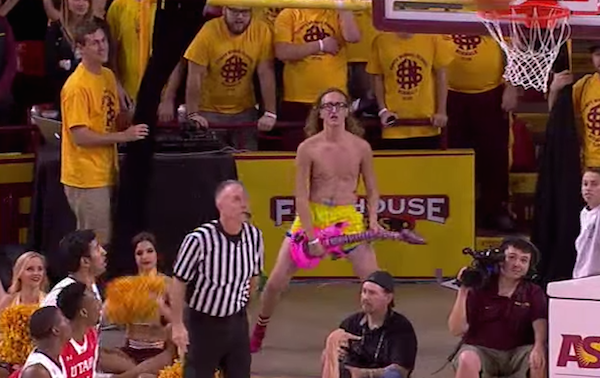
The ASU Curtain of Distraction a make-shift stage that the student section uses to try to distract opposing the opposing team when it is attempting free throws. As the opposing player stands on the free throw line the curtain opens to reveal all sorts of eye-catching displays, from a guy in a Speedo to kissing unicorns (see above for an example). Wolfers argues that the Curtain of Distraction provides ASU with a quantifiable benefit because it leads the team's opponents to miss free throws.

It's a fun news story that combines what is best about college kids supporting their home team and the ideal of data journalism to provide insights behind the story. It's likely that combination of narrative and numbers that landed this article on page one of the NY Times. Unfortunately, like a lot of what passes for "data journalism," when you take a closer look, the story and the numbers don't actually fit together. There is a deeper lesson here about the power of narrative over the substance of data. Let me explain.

Wolfer's article is about causality, and specifically it's about detecting the impact of the Curtain of Distraction in a time series of data on free throws in games that ASU has played at home in Tempe, AZ. There are of course many ways to look for signals in data using statistical methods. As far as methodologically challenging signal detection, this one is not too complicated, because the data is good and the phenomena to be explained are very well observed. Even so, the data do not lend themselves to unique or conclusive claims of causality.

But Wolfers thinks that they do. He explains what he did:
A statistical analysis by The Upshot — with an assist from Nick Wan, who runs the True Brain blog, and from Jan Zilinsky — suggests that the Curtain really works.

It appears to give Arizona State an additional one­ to two­ point advantage per home game, beyond the normal home court advantage. The Curtain may even have played the pivotal role in the Sun Devils’ recent upset of their state rivals, the Arizona Wildcats.

The easiest way to see the effect is to compare visitors’ free­ throw shooting percentage before and after the Curtain’s 2013 introduction. In each of the three seasons from 2010­-11 to 2012­-13, visitors missed 28 to 32 percent of their free throws. Last season, the Curtain’s first, the rate at which visitors missed free throws rose sharply, to 40 percent.

In the first 14 home games of this season — when the Curtain and its surprises have continued to appear — visitors have missed 36 percent of all free throws. If you didn’t know better, you might suspect that the size of the hoop had gotten smaller.

Given the timing, and the fact that players are powerless to defend a free throw, it seems reasonable to attribute this sharp change to the student high jinks, rather than any change of players or strategy. In fact, the statistics largely rule out competing explanations.
As I'll show, the last sentence is completely wrong, and the conclusion of detection a strong signal from the Curtain of Distraction - an effect of 1 or 2 points a game - is just not supported by the data, despite the appeal of the narrative.

One mistake that Wolfers makes is to look at all free throws. The Curtain of Distraction (CoD) appears only on one side of the court, the student section, which ASU opponents face only in the second half of each game. So to look for a signal of the CoD we should look for its effects in second half free throws.

What do we see when we break down ASU opponents' free throws by half?

In the first half opponents shoot 66.7% when not facing the CoD. In the second half that drops to 61.1%.

Aha!! ... we might say, the effect is 5.6%. But as any student of causality knows, detecting a difference is not the same as accounting for that difference. So let's take a look at individual games to see if we might account for that difference.

It turns out that 8 of the 14 ASU opponents (including 7 of its last 9) actually improved their free throw percentages in the second half. Thus, there is very little basis in these 8 games to suggest that the CoD caused worse free throws. In fact, one could make a stronger case that the CoD improved second-half free throw shooting in the majority of ASU games. Of course, given any data, lots of plausible theories could be proposed. 

Looking game-by-game we can quickly see that through ASU's 14 home games this season so far, the reason that opponents shoot a lower free throw percentage in the second half can be entirely attributed to ASU's first two games of the season, Chicago St. and Bethune-Cookman. Chicago St. is ranked 333 of the 351 teams tracked by ESPN, and Bethune-Cookman is ranked 344. These are two of the worst teams in the country. One could plausibly come up with a large number of possible explanations for their poor free throw shooting in the second half - including the CoD - but also more prosaic reasons such as fatigue, or early-season road jitters, or the pressure of facing a much better team, or just chance, or something else.

Since those two games, in the subsequent 12 home games opposing teams at ASU have made 62.3% of their free throws in the first half and 65.0% in the second half. When facing the CoD teams have on average improved their free throw shooting! So even if we were to postulate a CoD effect in those first two games, it clearly wore off pretty quickly (and maybe even reversed;-).

Wolfers takes the causality argument even further when he writes that the CoD "may even have played the pivotal role in the Sun Devils’ recent upset of their state rivals, the Arizona Wildcats." Again, a wonderful story, even movie-script stuff, but the data just does not cooperate. Arizona was 0-2 from the line in the first half and 8 for 12 in the second half (66%). Arizona's season-long free-throw percentage is 69.2%. 

The bottom line here is that the evidence does not support, much at all and far from strongly or uniquely, a claim that the ASU Curtain of Distraction impacts opponents free throws in any quantifiable way. (For other analyses see the Harvard Sports Collective and True Brain). 

Sure one can spin a compelling narrative and find some numbers that seem to support that narrative. As the saying goes, numbers which are sufficiently tortured using statistical methods will ultimately confess. As a corollary I might add that pretty much any narrative one cares to spin can be supported by some plausible or plausible-sounding data. But I'm also pretty sure that is not how "data journalism" is supposed to work. 

As far as narratives go, the ASU Curtain of Distraction is a great one. Too bad the numbers don't follow along.

PS. If you'd like to play with the data from ASU's first 14 home games, here it is.

Wednesday, February 11, 2015

The (Mostly) Non-News of FIFA's Watered Down Governance Report

Earlier this week Der Spiegel reported that FIFA's "independent" reform committee had submitted a draft of its final report to FIFA, and made subsequent changes at FIFA's request. Someone apparently leaked internal FIFA emails.

As readers of this blog will appreciate, the news is really not news.

We have known for a while that the FIFA IGC (reform committee) was not independent and that its report was watered down (see this summary and full analysis in PDF). We also know that the FIFA IGC chair, Professor Mark Pieth, has faced a wide range of challenges dealing with FIFA, and has not always come away from the experience in the best light (just search this blog for "Pieth").

If there is little new here, the fact that this information has been leaked is itself interesting. Either the internal emails were leaked by Pieth or someone within inside FIFA's "football family." If the former then Pieth once again comes away the worse off, as FIFA's effusive defense of him (via this press release) simply provides more evidence of how conflicted his role of IGC chair actually was -- FIFA actually wrote: " People should stop questioning the independence of such a credible character." Ouch!

If the leaker is another FIFA insider, then it would speak to an internal split over the organization's leadership. However, were I to guess, I'd say that the leak most probably comes from Pieth. Any insider wanting to embarrass Sepp Blatter and also with access to confidential FIFA emails surely has to have better material than this weak tea.

Either way, the leak tells us nothing that we didn't already know: Sepp Blatter is well on his way to captaining FIFA to another term.

Monday, February 2, 2015

My Talk on "Sex Testing" Now Available

You can see my recent talk on "sex testing" in sport here. (Opens an AdobeConnect window)

If you'd like just the slides, they are here in PDF.

And if you'd like a draft for comment version of the full paper, just drop me an email (rpielkejr at gmail). I am happy to receive comments and appreciative of those who have already sent some.

Here is the abstract:
Sugar, Spice and Everything Nice:“Sex Testing” in International Athletics

Roger Pielke, Jr.
University of Colorado
Center for Science and Technology Policy Research

Abstract

In many settings, decision makers look to science as the basis for making decisions that are made difficult by their social or political context. Sport is no different. For more than a half century sports officials have looked to science to provide a clear distinction between men and women for purposes of determining who is eligible to participate in women’s athletic competitions. However, the science of sex provides overwhelming evidence that there is no such clear biological demarcation that differentiates men and women. Despite this evidence, the International Olympic Committee and the International Association of Athletics Federations in 2011 implemented a form of “sex testing” based on androgens, and specifically, testosterone levels in females. This paper evaluates this policy, finding it contradictory to scientific understandings of sex and counter to widely-held social norms about gender. The paper recommends an alternative approach to determining eligibility for participation in women’s sports events, one more consistent with the stated values of sports organizations, and more generally, with principles of human dignity.