Monday, September 30, 2013

A Proposal to Compensate College Athletes

Below is a proposal to allow college athletes to capitalize on their economic value via the model used under the Bayh-Dole legislation which shared intellectual property rights with faculty who do research in universities using federal funds. It is an argument I've alluded to on this blog before.

My proposal is so compelling that ... I couldn't get it published anywhere, ahem. So here it is!
What the NCAA can learn from Bayh-Dole

College sports are facing a crisis. A group of about two dozen current and former college athletes, led by former UCLA basketball star Ed O’Bannon have sued the National Collegiate Athletics Administration. The athletes argue that licensing revenues generated by the NCAA using the images and likenesses of specific players should be shared with those players. In the coming weeks a federal judge will decide whether to certify the case as a class action, which would then bring into the case many thousands of former and current college athletes.

If that were to occur, then the NCAA and universities could be responsible for paying billions of dollars to college athletes. In 2012, the top 5 college athletic conferences collectively received over $1 billion in television revenue for football and the March Madness spring post-season basketball tournament operates under a 14-year, $10.8 billion television agreement. March Madness alone generated more than a billion dollars in TV ad revenue, exceeding that of the National Football League, the National Basketball Association and Major League Baseball. Johnny Manziel, the Texas A&M quarterback who won the Heisman Trophy last year, generated an estimated $37 million in publicity for his university last year.

With the magnitude of the financial stakes, it is only a matter of time before the dam breaks and the notion of the “scholar-athlete” who plays only for school pride and a scholarship becomes a thing of the past. Rather than wait for a court decision, a labor action by high profile athletes or other possible revolutionary changes, the NCAA and universities can get ahead of this issue by paying attention to the lessons of history very close to home.

In 1980 the US Congress passed what the Economist called in 2002 “possibly the most inspired piece of legislation to be enacted in America over the past half-century.” The Bayh-Dole Act changed property rights with respect to the discoveries made in universities as a result of federally funded research. Prior to 1980 the US government retained ownership of the intellectual property associated with discoveries which resulted from federal research and development. Very few of the patents owned by the federal government were being been commercialized, and policy makers sought a way to better capitalize on the billions of dollars in federal R&D taking place at universities.

Under the law, professors and other university researchers who create intellectual property gain a share in its rewards, thereby creating strong incentives both to discover and to commercialize. In the two decades following the passage of Bayh-Dole US universities increased their patents by 1,000% and added an estimated $40 billion annually to the economy. At the same time, the law ensured that technology transfer activities on campus would be closely monitored to ensure that the mission of universities was not compromised.

So what does Bayh-Dole tell us about college athletics? Several years ago, former Senator Birch Bayh explained why the Bayh-Dole Act works: “it aligns the interests of the taxpaying public, the federal government, research universities, their departments, inventors, and private sector developers transforming government supported research into useable products.”

The NCAA and universities should explore aligning the interests of scholarship athletes, university campuses, the NCAA and the sports public with the incredible revenue potential of college sports. Assigning to universities the intellectual property rights of athletes which play under their names while creating a revenue-sharing model with those athletes would meet this need. Just as occuered with respect to the faculty, such an approach would encourage the further generation of revenue from sports, creating a windfall for many college athletic programs, some of which are strapped for cash, and deliver deserved rewards to the scholarship athletes who play the games.

A revenue-sharing model has served college faculty who conduct research and their home universities very well over more than three-decades. Universities should get to work on adopting a similar model for its athletes, before change is forced upon them, perhaps abruptly.


Friday, September 20, 2013

Platini Confirms Political Influence in FIFA Qatar Vote

To some it will be a statement of the obvious, to others an admission that should ring alarm bells. Responding to the assertion of the Fifa president, Sepp Blatter, that the Qatar 2022 World Cup was a "political" choice by European voters, the Uefa president, Michel Platini, has confirmed that "political and economic influences" were a factor.

The controversial selection of Qatar to host the 2022 World Cup in December 2010 has resulted in a bitter row over whether the tournament should be moved to winter to avoid the searing summer heat, a move expected to be agreed in principle by Fifa next month.

Blatter, who voted for the US to host the 2022 tournament but has since become an advocate of moving it to winter, said in an interview this week that there was "definitely direct political influence" on European executive committee members to vote for Qatar.

"European leaders recommended to its voting members to opt for Qatar, because of major economic interests in the country," he told the German weekly Die Zeit.

Following a meeting of all 54 Uefa member associations in Dubrovnik, at which they confirmed in principle their support for a winter World Cup in 2022, Platini confirmed Blatter's comments. "With the extraordinary influence Mr Blatter has," Platini said, "he has only all of a sudden realised there are political and economic influences when we decide who will host an Olympic Games and so forth? It's better late than never I guess."

Platini sardonically added: "It's new, apparently. It was said that Europeans voted for Qatar but Qatar got 14 votes. We're only eight. If you subtract eight from 14 you get six left over."
The issue of how Qatar got 14 votes has been widely discussed. Here is how one Australian newspaper characterized the vote back in 2010:
UEFA boss Michel Platini reportedly gave his vote to Qatar on the request of his French President Nicolas Sarkozy after France signed a favourable oil deal with the tiny Middle Eastern nation.

When asked why so many of the ExCo had voted for Qatar, Mr [Peter] Hargitay [FIFA insider and consultant to Australia's failed bid] replied "You go figure it out. What do you think motivates people, 14 of them, to vote for a country the population of Zurich, to vote for a country that is the size of Fiji, to vote for a country where the infrastructure to play host to millions of fans still has to be created?"
You can see an overview of the so-called Qatargate issue here.

Wednesday, September 18, 2013

Fox Sports Reported to Oppose FIFA World Cup Schedule Change

In my paper on holding FIFA accountable (here in PDF) I discussed six different mechanisms of accountability, drawing on the academic literature on governance. One of those was market accountability:
Market accountability refers to influence that is exercised by investors or consumers through market mechanisms.
According to Bloomberg, Fox Sports is not happy with FIFA proposed move of the 2022 World Cup to a winter date:
Fox Sports, which agreed to pay a record fee for U.S. broadcast rights to soccer’s World Cup, told the sport’s governing body it opposes plans to reschedule the 2022 event in Qatar, two people familiar with the matter said.

James Murdoch, the son of 21st Century Fox Inc. Chairman Rupert Murdoch, and other network executives told FIFA that moving the competition by several months from its usual June start to the winter would clash with National Football League games, according to one person familiar with the matter. The people requested anonymity because the talks were private.

FIFA’s executive board is meeting next month to discuss a proposal by the Zurich-based organization’s president,Sepp Blatter, to reschedule the tournament because of the high temperatures in Qatar. Fox in 2011 agreed to pay $425 million for the two-tournament, 2018-22 package, more than four times what current rights holder ESPN paid for the 2010 World Cup in South Africa and next year’s tournament in Brazil.

“FIFA has informed us that they are considering and voting on moving the 2022 World Cup,” Fox said in an e-mailed statement. “Fox Sports bought the World Cup rights with the understanding they would be in the summer as they have been since the 1930s.”
Sponsors and others with a financial stake in FIFA have not in the past shown too much concern about FIFA governance. The 2022 Qatar World Cup decision is different in that it has a clear relationship to television revenues, and Fox is heavily invested in making money off of the tournament.

In football governance, as elsewhere, money talks. Fox Sports has the potential for significant influence on FIFA upcoming decision making. Stay tuned.

The Business of the NFL

Monday, September 16, 2013

The Proposed Reforms from Mark Pieth's 2011 Report Unimplemented by FIFA

Below you can find the recommendations made by Mark Pieth in 2011 in his report Governing FIFA which I have identified as having not been adopted by FIFA in its reform process. These recommendations comprise part of the reform evaluation which I recent discussed at Play the Game back in June and to which FIFA responded to here.

After preparing the report for FIFA, Professor Pieth got into a bit of hot water when he was subsequently appointed to chair the FIFA Independent Governance Committee and it was learned that his institute had accepted from FIFA an undisclosed $128,000 plus a $5,000 daily fee to prepare the report.

Overall, I identified 15 statements in the form of recommendations in the 2011 Pieth report. Of those 15, FIFA failed to even partially implement 13. Those 13 are listed below, to aid in discussion and (ideally) debate. Questions worth thinking about include: Which ones are most important? Which ones are secondary? Which may be off the mark? Comments welcomed either here or via email.

I've blogged on the unimplemented recommendations from the Transparency International report Safe Hands: Building Transparency and Integrity at FIFA and shortly I will also list those recommendations unimplemented found in the first report of the FIFA IGC.

  • FIFA could further upgrade its existing financial governance, in particular by: developing a catalogue of potentially critical payments, and by deciding whether direct controls are warranted or whether indirect controls could be sufficient; 
  • . . . intensifying its specific anti-corruption controls within existing COSO. 
  • FIFA should upgrade its compliance system to meet the requirements of a state of the art corporate anti-corruption compliance programme (including a review of the Code of Ethics, the risk analysis, the detailed rules on contributions etc. and the hiring of third parties, education and training as well as notification channels). Particular emphasis needs to be placed on the credible implementation of the programme. Member Associations and Confederations should be encouraged to adopt comparable standards. 
  • On an organisational level, FIFA should consider electing independent members into the ExCo. 
  • A Compensation and Benefits Committee should decide over benefits of officials of FIFA bodies and senior staff. 
  • Candidates should announce their wish to stand sufficiently ahead of the election. 
  • FIFA should examine a system of campaign financing which provides officially announced candidates with sufficient backing (a certain number of Member Associations) with FIFA funding, ruling out further private campaign contributions. 
  • FIFA should consider limiting terms of office of its officials. 
  • FIFA should consider introducing regular due diligence checks by the Ethics Committee on elected Members of its bodies. A regulation should specify cases of incompatibility with the FIFA function. The regulation should also define the procedure, and clarify under which circumstances an official would be temporarily suspended from his function. 
  • Decisions on hosting and on commercialising would greatly benefit, beyond a review of the actual procedures, of an overall abstract strategy, defined by relevant Committees and ratified by Congress. 
  • An institution of the size and significance of FIFA needs a state of the art conflict of interest regulation, indicating cases of conflict and specifying the procedures (up to a possible recusal). While a conflict of interest regulation is a general requirement, it will be particularly useful to prevent abuses and adverse publicity in FIFA’s relations to Members. 
  • Additional preventive measures ensuring transparency and accountability in its relations with Members should be taken in the area of financial contributions for the development of football in countries and regions
  • Members should be taken in the area of financial contributions for the development of football in countries and regions. An overall strategy should be adopted for the multitude of historically grown funds. They should be governed in a comparable manner, and expenditure as well as uses audited on the standard of the Goal Programme and FAP.

Sunday, September 15, 2013

What The Sports Gene Gets Wrong

As readers here know, I really like The Sports Gene by David Epstein, formerly of Sports Illustrated and now at Pro Publica. The book overall is excellent and has already motivated several posts -- here and here. In this post I pick a nit with respect to the book's treatment of testosterone and athletic performance with respect to determining who is judged eligible to compete in women's athletics, a complicated issue that deserved to be treated more comprehensively.

Back in spring 2012, students in my graduate seminar on Science and Society were tasked with coming up with a policy for determining who would be allowed to participate in the women's events in the then-upcoming 2012 Olympics in London. The case that we were looking closely at was of course that of Caster Semenya of South Africa, a female athlete whose treatment by the sporting community was embarrassing and undignified.

At that time the International Olympics Committee adopted a policy (following the lead of the International Association of Athletics Federations or IAAF) which used testosterone levels in and usage by the body as the criterion for determining eligibility for participating in women's events.The policy called for a panel of experts to make judgments in contested cases on the following (the policy is here in PDF):
The Expert Panel shall examine all available information and establish (i) whether the investigated athlete’s androgen level, measured by reference to testosterone  levels in serum, is within the male range, and if so, (ii) whether such hyperandrogenism is functional or not.
The Sports Gene notes this policy as well as a similar policy adopted by the NCAA and notes that "testosterone has been deemed the source of the male athletic advantage." Epstein observes that testosterone may not be all there is to the advantage, as women who are unable to process testosterone -- call androgen insensitive -- are actually over-represented in sports, "vastly" so according to Epstein.
It is here where I pick my nit. Unlike the in depth and nuanced exploration of reasons behind Jamaican sprinting success found in The Sports Gene, the role of testosterone in female athletic success -- which is just as complex, contested and nuanced is given short shrift.

Epstien sums up the science on this issue as follows:
No scientist can claim to know the precise impact of testosterone on any individual athlete. But a 2012 study that spent three months following female athletes from a range of sports--including track and field and swimming--showed that the elite-level competitors had testosterone levels that consistently remained more than twice as high as those of nonelites. And there are powerful anecdotes as well.
Fair enough, as far as it goes. But it doesn't go far enough.

In a critique of the IAAF and IOC policies published in 2012, Karkazis and colleagues (here in PDF) made a case against using testosterone as a criterion for determining eligibility for participating in women's sports events:
The new policies rest on the notion that the difference in athletic performance between males and females is “predominantly due to higher levels of androgenic hormones in males resulting in increased strength and muscle development” (IAAF 2011c, 1). Both policies rely in particular on testosterone levels as the mark of unfair advantage. Although it may be surprising, given that this is a popular belief and is stated as fact in both IAAF and IOC statements (IAAF 2011d; IOC 2011), the link between athleticism and androgens in general or testosterone in particular has not been proven. Despite the many assumptions about the relationship between testosterone and athletic advantage, there is no evidence showing that successful athletes have higher testosterone levels than less successful athletes.
Say what?
In sum, there is a great deal of mythology about the physical effects of testosterone and other androgens (Fausto-Sterling 1985; Jordan-Young 2010). Likewise, mental effects of androgens are often implied to give an additional boost to athletes, but placebo-controlled studies of testosterone show that increasing testosterone (above minimum functional levels) has no effects on mood, cognitive performance, libido, or aggression (Bhasin et al. 1996; Bhasin et al. 2001; Kvorning et al. 2006). Optimal levels of testosterone is one of many factors that is necessary for athletes to achieve their own “personal best,” but comparing testosterone levels across individuals is not of any apparent scientific value.
Karkazis et al. may indeed be on to something that the role of endogenous testosterone is vastly overstated. Perhaps instead the suggestive research by Christopher J. Cook and colleagues (replied on by Epstein) could be more correct in identifying endogenous testosterone as a key determinant of elite female athletic success. Clearly there are uncertainties and disagreements in the basic scientific understandings. As The Sports Gene well explains, such complexities are much the norm with respect to human athletic achievement.

Science issues aside, the IAAF and IOC policies may indeed represent a pragmatic compromise that is both legitimate and fair. Certainly the Karkazis et al. recommendation to used national legal definitions of what it means to be female is pragmatically untenable. Karkazis et al. do make a compelling case that the expert advisory process which developed the guidelines fell short in important respects, including its composition, procedures and scope.

As with the case of Jamaican sprinting success and east African long-distance success, the issue of sex differences and advantage in athletic competition is complicated -- more complicated than its treatment in The Sports Gene. Of course, this is but one nit in what is overall an excellent book, and one that will be required reading in my upcoming spring 2014 course.

Tuesday, September 10, 2013

Flaws in a Case for Doping

Malcolm Gladwell has made an argument for doping in sport. Riffing (again) off of David Epstien's The Sports Gene, Gladwell argues that doping in sport actually serves to level the playing field, by helping people to overcome natural limitations. This post explains why Gladwell's argument falls apart.

At The New Yorker Gladwell writes:
The ability to consistently hit a baseball thrown at speeds approaching a hundred miles an hour, with a baffling array of spins and curves, requires the kind of eyesight commonly found in only a tiny fraction of the general population.

Eyesight can be improved—in some cases dramatically—through laser surgery or implantable lenses. Should a promising young baseball player cursed with normal vision be allowed to get that kind of corrective surgery? In this instance, Major League Baseball says yes. Major League Baseball also permits pitchers to replace the ulnar collateral ligament in the elbow of their throwing arm with a tendon taken from a cadaver or elsewhere in the athlete’s body. Tendon-replacement surgery is similar to laser surgery: it turns the athlete into an improved version of his natural self.

But when it comes to drugs Major League Baseball—like most sports—draws the line. An athlete cannot use a drug to become an improved version of his natural self, even if the drug is used in doses that are not harmful, and is something that—like testosterone—is no more than a copy of a naturally occurring hormone, available by prescription to anyone, virtually anywhere in the world.
The underlying logic here is as follows:
It is a vision of sports in which the object of competition is to use science, intelligence, and sheer will to conquer natural difference... this kind of achievement [may simply be] worthier than the gold medals of a man with the dumb luck to be born with a random genetic mutation.
In the real world, the use of science, intelligence, and sheer will to conquer natural difference is commonplace in sports. Think of Lionel Messi's hormone-aided growth treatments as a youth in the Barcelona youth academy. Think of Oscar Pistorius and his blades. Think of Tiger Woods and his lasered eyes and surgically repaired knees.

Performance enhancement through science, technology and expertise is fundamental to sport. But so too is the drawing of lines. Human growth hormone for a kid with growth hormone disorder is deemed acceptable but human growth hormone for a professional cyclist is not. Such decisions reflect both broad social values and the values of the sports community. They are of course arbitrary in important respects, and thus routinely contested, constantly re-negotiated and often, inconsistently applied across specific contexts. Sport governance is of course like governance more generally.

Gladwell apparently does not like the drawing of lines in the context of doping. However, lines must be drawn. I could certainly enhance my performance in the 10,000m by riding a bicycle, but that would against the rules. Doping rules are an extension of the rules which govern competition, and have been developed at the constitutive level. 

Gladwell's general approach to doping only makes sense if anything goes -- once you accept that lines must be drawn between what is acceptable performance enhancement and what is not, then the debate becomes one over where that line should be drawn, and that is how things presently work. The case for drawing lines in a different place is often made, but it is not the argument made by Gladwell.

A less charitable interpretation of Gladwell's call for doping to level the playing field is that he is still smarting from Epstein's solid critique of the 10,000-hour path to expertise popularized by Gladwell in his book Outliers. Perhaps Gladwell is now admitting that exceptional talent does exist, but that it should be neutered so that what really matters is effort, and the 10,000 hours. 

Either way, Gladwell's case for doping falls apart. Sports are governed by rules, and rules governing performance enhancement are necessary and important.

Tuesday, September 3, 2013

Who Are the Best Athletes in the NFL?

This is another post motivated by David Epstein's excellent new book, The Sports Gene. This post summarizes a recent study of athletic performance of players in the NFL draft. There are countless ways to measure what it meas to be a "good athlete" and this post looks at a study which used data that NFL teams seem to thing is useful to have to evaluate players in the NFL draft.

Deep in the book Epstein refers in a footnote to a 2011 paper which evaluated football players in the NFL draft according to 9 different tasks (3 are part of the 36.6-m sprint, and 2 are not listed here, bench press, as it is not applied to all players):
  • 36.6-m Sprint. The 36.6-m sprint is a test of acceleration and maximum speed. From a 3-point stance, a player runs 36.6 m as fast as he can. Split times are also recorded at 9.1 and 18.3 m. Thus, the 36.6-m sprint test provides 3 separate outcome measures. The 9.1- and 18.3-m split times are measures of acceleration, whereas 36.6-m sprint time is a measure of maximal, or near--maximal, speed. It has previously been suggested that near-maximal speed is achieved by 18.4 m in college American football players (4). Thus, the first 18.3 m of the 36.6-m sprint can be viewed as an acceleration phase, whereas the second half can be viewed as a maximal speed phase.
  • Vertical Jump. The vertical jump is a measure of vertical jump ability. Jump height is measured using a device (e.g., Vertec) whereby players jump for maximal height from a standing 2-footed position in a countermovement manner with arm swing. At the peak of the jump, the player reaches as high as possible with a single hand to move horizontal vanes of the Vertec. Vertical jump height is calculated by subtracting the player’s standing-reach height from the height of the highest vane moved.
  • Standing Broad Jump. The standing broad jump is a test of horizontal jump ability. Horizontal jump distance is measured. From a standing 2-footed position, with countermovement and arm swing, the player jumps forward for maximal distance. Jump distance is measured as the distance from the start line to the nearest body part landing point (this is typically the point of heel contact).
  • 18.3-m Shuttle. The 18.3-m shuttle is a test of change of- direction ability (1). From the starting position, a player runs 4.6 m in 1 direction, quickly changes direction and runs 9.1 m in the opposite direction, and then changes direction again and runs a final 4.6 m in the opposite direction (i.e., the direction in which he initially ran). The test is run in both directions (i.e., left and right) for maximal speed, and the average of the 2 tests is recorded as the score.
  • Three-Cone Drill. The player runs around 3 cones placed in the shape of an ‘‘L,’’ with 4.6 m between each cone. From a 3-point stance, the player runs a predetermined route as quickly as possible. This test is also a measure of change of- direction ability (7).
The paper presented data for 14 difference NFL positions. I ranked each position using a points scheme, with 14 points going to the best performing position and 1 to the worst. I then summed the points across the 7 tasks to arrive at an overall score.

Here are the results:
Total Points Average points per task Overall ranking
Corner Back 96 13.7 1.3
Wide receiver 86 12.3 2.7
Free Safety 79 11.3 3.7
Strong safety 79 11.3 3.7
Running Back 71 10.1 4.9
Outside Linebacker 64 9.1 5.9
Inside Linebacker 50 7.1 7.9
Tight end 45 6.4 8.6
Fullback 40 5.7 9.3
Defensive End 36 5.1 9.9
Quarterback 35 5.0 10.0
Defensive Tackle 20 2.9 12.1
Offensive Tackle 15 2.1 12.9
Offensive Guard 7 1.0 14.0

Corner backs are the best athletes, offensive linemen are the worst. To my surprise, quarterbacks rank just above the linemen, and are among the worst athletes. Enjoy!

Monday, August 26, 2013

Time to Rethink the Goldman Dilemma?

The so-called "Goladman Dilemma" is one of the most frequently cited statistics in discussions of doping in sports. It holds that world class athletes are not like you and me because many more of them would be willing to engage in prohibited or illegal doping even it it meant a certain, early death in exchange for sporting success. Recent research however suggests that the Goldman Dilemma is no longer an appropriate characterization of the view of elite athletes (if it ever was).

The Goldman Dilemma was characterized as follows in the New York Times in 2010:
There’s a well-known survey in sports, known as the Goldman Dilemma. For it, a researcher, Bob Goldman, began asking elite athletes in the 1980s whether they would take a drug that guaranteed them a gold medal but would also kill them within five years. More than half of the athletes said yes. When he repeated the survey biannually for the next decade, the results were always the same. About half of the athletes were quite ready to take the bargain.
The original source oh the dilemma is apparently a 1984 book, by Bob Goldman and colleagues, titled Death in the Locker Room.

A new study in the British Journal of Sports Medicine by James COnnon, Jules Woolf and Jason Mazanov has tried to replicate Goldman's findings with a rigorous survey of elite North American track and field athletes. They were motivated to do the study because, "there has been little in the way of replication of the Goldman dilemma since 1995."

Titled "Would they dope? Revisiting the Goldman dilemma" the study finds results at odds with that of the Goldman dilemma:
Only 2 out of 212 samples (119 men, 93 women, mean age 20.89) reported that they would take the Faustian bargain offered by the original Goldman dilemma. However, if there were no consequences to the (illegal) drug use, then 25/212 indicated that they would take the substance (no death condition). Legality also changes the acceptance rate to 13/212 even with death as a consequence. Regression modelling showed that no other variable was significant (gender, competitive level, type of sport) and there was no statistical difference between the interview and online collection method.

Goldman’s results do not match our sample. A subset of athletes is willing to dope and another subset is willing to sacrifice their life to achieve success, although to a much lesser degree than that observed by Goldman.
The results suggests that elites athletes are perhaps more like you and me than suggested by the Goldman dilemma. However, even with 1-2% of elite athletes willing to accept Goldman's Faustian bargain, it still helps to explain why doping is pervasive.

Wednesday, August 21, 2013

The 10,000-hour rule: Epstein vs. Gladwell

David Epstein and Malcom Gladwell are having a bit of a debate. In his new (and excellent) book The Sports Gene, Epstein takes strong issue with the idea that 10,000 hours of practice is a useful rule of thumb for how much practice it takes for someone to be world class.

The "10,000-hour rule" was popularized by the writer Malcolm Gladwell in a chapter with that title in his 2008 book Outliers. In it Gladwell quotes approvingly neurologist Daniel Levitin (p. 40):
[T]en thousand hours of practice is required to achieve the level of mastery associated with being a world-class expert -- in anything. In study after study, of composers, basketball players, fiction writers, ice skaters, concert pianists, chess players, master criminals ... no one has yet found a case in which true world-class expertise was accomplished in less time.
For his part Epstein agrees that practice helps perfect, but finds the evidence to be far more nuanced and complex, arguing that "drastically different amounts of practice ... will be required for similar outcomes." Epstein adds, "somehow, the 7,000-to-40,000-hours rule just doesn't have the same ring to it" (p. 23).

Epstein explains further in an interview with Outside magazine:
Outside: The popular narrative you found while researching the book was the 10,000-hour rule made famous by Malcolm Gladwell’s book Outliers. Was the idea that pervasive?

Epstein: Totally. And it motivated me to do the book, actually, and this was before I even knew how I felt about the so-called rule. . . people would call it “Gladwell’s 10,000 hours” as if he had done the research for it. It started to bug me. People were using it just to mean that practice was important, that’s it. That’s not what the theory says. The researcher behind it, Anders Ericsson, has said that he thinks all people have the necessary genes to be elite performers. Just saying that practice is important is totally uncontroversial. From a scientific standpoint it’s useless. Scientists have to say how important it is, what else is important? I found it to be troubling from a scientific standpoint and the more I evaluated it, the more it seemed to unravel. And ultimately, Ericsson read Outliers and said Gladwell misconstrued his work. His words, not mine.

Outside: How did Gladwell misconstrue it?

Aside from not having copied the numbers from the actual paper correctly for his book? He says that there is a perfect correspondence between practice and the level of expertise a person attains. And you can’t tell that from the paper. The 10,000 hours is an average of differences. You could have two people in any endeavor and one person took 0 hours and another took 20,000 hours, which is something like what happened with two high jumpers I discuss in the book. One guy put in 20,000 and one put in 0, so there’s your average of 10,000 hours, but that tells you nothing about an individual.

Now, Gladwell doesn’t say there’s no such thing as genetic talent. I think other writers are stricter than him. [Matthew Syed’s] Bounce is a book that minimizes talent. Gladwell does say elite performers are more talented. One of the things that Ericsson criticizes Gladwell about is to say that 10,000 hours is some kind of rule. The paper just says that these performers by the age of 20, these performers have accumulated 10,000 hours but there’s no where that says it’s a magical number where that’s when they become elite or anything like that.
Today, Gladwell responds to Epstein's critiques at The New Yorker, asking, "I wonder if, in his zeal to stake out a provocative claim on this one matter, [Epstein] has built himself a straw man."

Gladwell defends the "10,000-hour rule":
[Epstein] cites a study by Guillermo Campitelli and Fernand Gobet of a hundred and four competitive chess players. Epstein says that they found that the average time it took to reach “master” status was eleven thousand hours—but that one player reached that level in just three thousand hours. This is variation on an extreme scale. Does that mean that in chess “naturals” really do exist? I’m not so sure. Epstein is talking about chess masters—the lowest of the four categories of recognized chess experts. (It’s Division II chess.) Grandmasters—the highest level—are a different story. Robert Howard, of the University of New South Wales, recently published a paper in which he surveyed a group of eight grandmasters and found that the group hit their highest ranking after fourteen thousand hours of practice. Even among prodigies who reached grandmaster level before the age of sixteen, we see the same pattern. Almost all of that group reached grandmaster level at fourteen or fifteen, and most started playing when they were four or five. The famous Polgár sisters (two of whom reached grandmaster status) put in somewhere north of fifty thousand hours of practice to reach the top. Epstein, similarly, argues that studies show that it takes only four thousand hours to reach “international levels” in basketball. The study in question was of a sample of players from the Australian men’s basketball team. I have nothing against either Australia or Australian basketball. But I’d be a bit more impressed if someone could find a starting point guard in the N.B.A. with fewer than ten years of basketball under his belt.
Gladwell might be interested in Steve Nash, long-time NBA veteran and wannabe soccer player. Nash started playing basketball in 1988 while in 8th grade. Less than 9 years later Nash started an NBA game at point guard for the Phoenix Suns. Would this case impress Gladwell?

The case of Steve Nash, and other NBA basketball stars with more or less experience simply reinforces Epstein's argument -- the answer to the question of whether talent or practice matters more is always: it depends. It depends on the task and on the individual. Sometimes the combination of task and individual means that less practice is needed to achieve world class expertise, some times more, and sometimes there is simply no combination that leads to world class expertise (e.g., me and long-distance running!).

One thing that we can say for sure from this debate -- There is no "10,000-hour rule." It is an oversimplification of a much more complex set of ideas. The Sports Gene helps to put it in its proper place.

Tuesday, August 20, 2013

Jamaica's Doping Hurricane

At Sports Illustrated Renee Anne Shirely, the head of Jamaica's Anti-Doping Commission (JADCO, somewhat equivalent to USADA) from June, 2012 to February, 2013, has written a powerful indictment of Jamaican athletics and its approach to doping.

She writes:
JADCO was formally established only in 2008, and the program has had a difficult childhood. In 2010, after WADA head David Howman pointed out that JADCO had board members who also lead sports associations on the island, the entire 15-member JADCO board of directors was dissolved. One of the dismissed board members, Dr. Herbert Elliott, was Jamaica's team doctor at the Beijing Olympics, and is now chairman of JADCO.

In July, Elliott was vague when asked about the number of out-of-competition tests conducted by JADCO in 2013. "I don't want our athletes to know whether it's 400 or 500 or whatever," he told The Guardian. But Prime Minister Portia Simpson Miller recently told Parliament that—in total since 2009—there have been 356 out-of-competition tests conducted in Jamaica.

The current program—while improved—makes a mockery of Jamaica's posturing and flames suspicion more than it douses it. Between the time Between the time the current board was appointed, in February 2012, and the start of the London Olympics late last July, out-of-date testing kits and limited staffing resources resulted in a total of one out-of-competition test. Below are the full 2012 testing numbers by month—with not one out-of-competition test in the three months leading into the Games . . .
Shirley explains some of the challenges that she faced, leading to her stepping down:
When I took over, in mid-July, JADCO did not have a large enough staff in place to carry out rigorous anti-doping programs. The Doping Control/Technical Services and the Education/Communications Units had only one junior staff member each, and the director positions were vacant. There was no Whereabouts Information Officer—in charge of keeping track of athletes so that they could be tested out of competition—and only one full-time doping control officer. The committee in charge of reviewing the legitimacy of medical prescriptions for athletes was without a chairman and had never met.

Other aspects of the program were equally troubled—and troubling. I arrived to find no accounting staff in place, and no monthly financial statements had been produced in the five years since inception. JADCO was behind on payments for a number of its bills. . .

During my time with JADCO, I also voiced concern about internet purchases of drugs and supplements by athletes, as there is reason to believe that some Jamaican athletes have been careless in their Internet purchases of dietary supplements, the ingredients labels of which are not tightly regulated in Jamaica. But despite my efforts I could not get any member of the JADCO board or member of Jamaica's Cabinet to take it seriously. They believe that Jamaica does not have a problem.

The more frustrated I became about the lack of staff and attention to issues I raised, the worse the working environment became for me, and in February of this year I met with a group of JADCO board members and we agreed it would be best if I stepped aside. Dr. Elliott has voiced his strong opinion that Jamaican anti-doping efforts are satisfactory. But this is not a time for grandstanding. In the wake of both recent achievements on the track and devastating positive tests off it, we need to believe that our athletes are clean and that our anti-doping program is independent, vigorous, and free from any semblance of conflicts of interest.
She recommends that the Jamaican government step in to provide greater oversight of JADCO. The JADCO sits under the Jamaican Prime Minister's Office and is thus a government entity, which differentiates it from USADA, which is in a quasi-governmental role.

A editorial in The Gleaner, a Jamaican newspaper, last week highlighted what is at stake in the poor governance of JADCO:
[C]are has to be taken that nothing is done to weaken Jamaica's athletics brand. That is why we are concerned by the seeming managerial governance dysfunction at the Jamaica Anti-Doping Commission (JADCO).

For a long time, external critics questioned the robustness of JADCO's drug-testing programme. This newspaper lamented its lack of transparency.

Eventually, JADCO's chairman, Dr Herb Elliott, lifting the veil slightly, caused it to dribble out that JADCO conducted 106 tests last year. But the agency's former executive director has since revealed that that figure is 50 per cent shy of the real mark and hints at bungling and incompetence at the level of the governors.

JADCO has offered no response of clarity, nor has it shared a strategic programme. Those are old ways that hurt Jamaica.

Travis Tygart Interview on NPR

KERA's Think program on public radio has a lengthy interview with Travis Tygart, president of the US Anti-Doping Agency. It is worth listening to in full.

Here is a link.

Monday, August 19, 2013

Sports Analytics Research and Sport Policy Outcomes: The Case of Racial Bias in the NBA

A few years ago I blogged on an interesting paper in the American Economic Review which identified a small but detectable racial bias in umpire decision making in Major League Baseball. As interesting as those findings were, what was most fascinating about the paper is its finding that the racial bias disappeared once the umpires became subjected to a rigorous mechanism of evaluation.

In that post I wrote:
The paper suggests that if you want to address systematic bias in subjective decision making, then pay close attention to decisions, use evaluations against an external metric to assess the decision maker performance with respect to performance objectives and ensure that decision makers are aware of the evaluation criteria.
A contemporaneous paper provides further support for this hypothesis. In a paper titled 'Awareness Reduces Racial Bias" Pope et al. (here in PDF) look at what they call a "natural experiment." The follow up on a widely discussed 2010 paper (Price and Wolfers 2010) which found evidence of a racial bias among NBA referees.

Here is how Pope et al. describe their analysis:
In this study, we exploit a natural experiment that occurred in May 2007 when the results  of Price and Wolfers (2010) received considerable media attention and ask whether this  increased awareness of racial bias changed the level of own-race bias displayed. Using new data,  we begin by replicating the original findings for the data period after the original study, but  before the media coverage (2003-2006). Easing the concerns associated with publication bias, we  find continued own-race bias during this period that is, if anything, larger than the bias found in  the original sample period (1991-2002).

We then test for bias in the data period immediately following the media coverage (2007-2010) and find zero evidence of racial bias. We argue that this dramatic decrease in bias is a causal result of the awareness associated with the release of the original academic study. We explore the mechanism for this effect and find no evidence that it is the result of institutional changes made by the NBA. We argue that the most likely explanation for our finding is that the decisions made by individual referees can be impacted by simply making them aware of their own racial bias.
They conclude:
There is a long history of studies showing that racial bias impacts how individuals are  treated in a variety of settings. An important question for academia and the media is what impact  the awareness of these results may have on individual decision makers. In this paper, we examine a real-world setting in which the individuals had large incentives to make correct decisions, but were still exhibiting significant amounts of racial bias. Our results suggest that  public awareness of racial bias was enough to bring about meaningful change.
The NBA and MLB studies together provide a compelling argument for the importance of sports analytics research in sports policy outcomes. Sometimes, sunshine can serve as a disinfectant, especially when that sunshine is used to hold decision makers accountable.

Sunday, August 18, 2013

The NYT Looks Back at Kelli White at PTG 2005

Today's New York Times has an essay by M. Nicole Nazzaro looking back at US sprinter Kelli White's admission of doping at the 2005 Play the Game conference. Here is how it starts:
Ten years ago this month, the American sprinter Kelli White tested positive for modafinil, a stimulant used to treat narcolepsy, after winning the 100- and 200-meter gold medals at the world track and field championships in Paris. It was the first time a track athlete from the United States had tested positive during a world or Olympic championship event.
Nazzaro explains how it was that White came to tell her story at the 2005 Play the Game Conference:
Kelli and I met again in November 2005 in a Copenhagen lecture hall, where I watched her tell her story at the Play the Game sports governance conference sponsored by the Danish Institute for Sports Studies. The executive director of the conference, Jens Sejer Andersen, had traveled to Oslo to hear Kelli speak at another conference sponsored by the World Anti-Doping Agency and was impressed. After a series of e-mails, she agreed to appear at Play the Game.

“I want to explain what it takes for the whole system to work,” she said in her prepared remarks in Copenhagen. “It not only took Conte’s help, it took my coach making me believe it was O.K. I think a lot of the time, what happens to athletes is that people make you believe that what you are doing is O.K. because everyone else is doing it.”
Andersen, reflecting last week on the success of that conference, said of White’s speech, “There is nothing to replace a firsthand eyewitness account” of doping. He added, “The potential for the encounter between Kelli and the audience was fully realized.”

From the darkest of days, White had emerged as a symbol of redemption.

Travis Tygart, the chief executive of Usada, also spoke at Copenhagen. His praise for White extends far beyond the importance of her telling the truth.

“Kelli is a wonderful example, still today, that when you try to right the wrongs you’ve committed, it becomes a great tale of redemption for other athletes who come forward,” Tygart said last week, recalling White’s cooperation with the Balco investigation.

“Kelli’s contributions to antidoping,” he added, “will have a much longer-lasting and beneficial impact for athletes and sport than anything she ever did on the track.”
You can read White's full remarks at that 2005 conference here in PDF.

In the NYT Nazzaro quote PTG's Jens Sejer Andersen explaining why the fight against doping matters:
Andersen, whose conference attracts sports journalists from around the world, believes deeply in the antidoping cause.

“It would be impossible” to legalize doping in sport, he said from his home in Aarhus, Denmark. “Today, you can say yes to doping or you can say no to doping.” He said if doping were legalized, it would become “a precondition, and you no longer have a choice.”

“Sport is an expression of civilization,” he said. “Sport has a moral side, and although it’s very difficult to maintain it, it’s worthwhile. We invest in police, but we still have crime. But we don’t give up, because there are certain values we want to protect.”
Civilization has politics, of course, and with respect to doping in sport, some believe that the battle has gone too far. It is a debate I'll be engaging in greater depth on this blog in coming months.

Friday, August 16, 2013

Is the NCAA Zeitgeist Changing?

Comments by John Sharp, chancellor of the Texas A&M university system, offer another data point in the changing views of scholarship athletes and the NCAA. NBC Dallas-Ft. Worth reports:
"I also think that there’s something, you know this is just me talking not as chancellor of the system, something is wrong with the system when we can make money off of our football players, the NCAA make money off of our football players and they can’t be treated like Olympic athletes," Sharp said.

Sharp went on to say that Olympic athletes at A&M are allowed to sell their signatures, but the rest of the student-athletes involved in NCAA programs can't.

"I suspect, courts or somebody or the NCAA is going to have to take a look at that and see whether or not they’re violating someone’s anti-trust deal. How can the NCAA, for instance, make money off of his jerseys and he can’t, you know, make two bucks off of signing something like that, like other athletes can who happen to be in the Olympics. That’s just my opinion," Sharp said.
When a leader like Sharp feels comfortable expressing in public views that previously were only shared in private, then it is a good indication that the time are a-changing.

The video at the top has Sharp's comments in full. 

US Interest in UEFA Champions League


Follow up on yesterday's post using Google Trends to assess US interest in soccer, the graph above shows a map of US interest in the search term "uefa champions league."

It shows that US interest in international soccer -- football to most everyone else -- by this measure is limited to affluent, urban and globalized regions of the country.

Thursday, August 15, 2013

US Interest in Soccer from Google Trends

Google has a neat application which lets you track interest in a topic according to how much attention it receives. The chart at the top of this page shows for 2004-2013 the results of a Google Trends search on
  • soccer
  • football
  • basketball
  • hockey
  • baseball
You can clearly see the seasonal cycle of interest peaking during the seasons and falling off during the offseason. The data show that soccer remains in fourth place of the five sports, with only hockey trailing. The exception is during the 2006 World Cup when soccer rivalled basketball for 2nd place in peak interest. Interestingly, soccer shows no signs of increasing interest, but football and basketball do.

Here is just the soccer data:

Wednesday, July 31, 2013

Cloned Horses and the Future of Competition

Imagine the Kentucky Derby circa 2040 ... Affirmed vs. Seattle Slew vs. Secretariat vs. Seabuscuit. No not horses with famous names, but those very horses, recreated through the technology of cloning.

Such a possibility became a bit closer to reality when a court in Texas ruled that the AMerican Quater Horse Association had to recognize cloned horses. The WSJ has the details:
A federal jury in Texas on Tuesday found the American Quarter Horse Association, which runs the world's largest horse-breed registry, is violating federal and state antitrust laws by barring cloned animals from its influential list.

The decision could force the group to admit cloned horses—and lead to similar lawsuits against other animal-breeder organizations that have sought to exclude cloned animals. Whether the U.S. District Court for the Northern District of Texas will require the group to change its rules will be decided at alater hearing that has yet to be scheduled.

A rancher and veterinarian sued the American Quarter Horse Association in 2012, arguing it was a monopoly that was effectively barring cloned horses and other animals not registered with it from participating in the group's competitions and shows. The lawsuit claimed that not being able to register the horses had lowered their value by 70% to 80% and reduced the number of potential buyers.

Lawyers for the plaintiffs, Jason Abraham and Gregg Veneklasen, said they are confident the verdict will lead the court to order the association to register their clients' cloned horses and their offspring, about 20 animals in all.

Tom Persechino, a spokesman for the horse association, which is based in Amarillo, Texas, said the group is considering an appeal. "It continues to be our position that when members voluntarily join an association, they should have the right to determine the rules," he said.
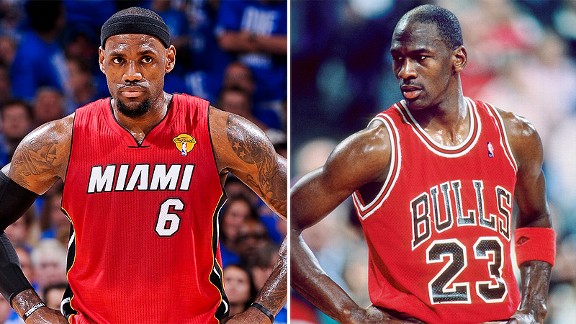
The debate over cloned horses brings other possibilities into sight. The 1996 Chicago Bulls vs. the 2012 Miami Heat in the 2102 NBA Clone Wars? 

Sunday, July 28, 2013

The Numbers Game: Are Corners Really Worthless?

I picked up The Numbers Game, by Chris Anderson and David Sally, while I was in Oxford earlier this summer. I really enjoyed it, and echo the positive reviews that the book has received. That said, I do have a few nits to pick, which I'll do over a series of posts.

Here I'll take on the claim that "corners are next to worthless," a conclusion which I think is vastly overstated. The Numbers Game argument rests on a chain of causality from corner kicks to shots to goals, and a finding that very few corners actually lead to goals.

In a blog post that first presented the analysis which appeared in the book Anderson and Sally explain their logic:
The data show that, on average, about 20.5% of all corners (that's 1 in 5) led to a shot by the team that took the corner within three touches of the ball. . . Of the corners that actually led to shots within three touches, what were the odds that the ball crossed the line? . . . On average, about 11% or 1 in 9 shots created from corners produce goals. Incidentally, that's also right around the average ratio for goals to all shots taken in soccer matches (the Reep ratio). . . The yield from corners ranges from 0 to .07. On average, the data show that a corner is good for (drumroll ....) 0.022 goals. This means that the average EPL team scores 1 goal from a corner about every 10 games. And this helps to explain the lack of a correlation between the number of corners and goal scoring. The infrequency of the goals from corners combined with a lack of dispersion between teams in corners per game lead conspire to make corners mostly, well, useless when it comes to scoring goals.
Let's now put the data on corner kicks into a bit different context.

In the Premier League in 2012/2013 there were 1,008 goals scored from 7,528 total shots.  So 13.4% of shots resulted in a goal scored, or each shot is worth 0.134 goals. This means that in the currency of goals, a shot is worth about 6 times as much as a corner (i.e., 0.134/0.022). Already, you can see that a corner is far from "next to worthless."

Let's now look at corners in the context of the larger category of which it is a part, -- the pass. According to Opta, in 2012/2013 the Premier League had 285,482 total passes. If we follow Anderson and Sally's approach with corners and define the three touches prior to a goal being scored as leading to the goal, then this means that 3,024 of the total passes led to goals (setting aside, for simplicity, unassisted goals).

Thus, in goal currency, each pass is thus worth 0.011 goals (i.e., 3,024/285,482). Put another way, corners are twice as likely to lead to a goal than passes generally. If corners are next to worthless, then passes must be even more worthless.

So how valuable are corners?

Simply looking at aggregate statistics, corners carry about 17% of the value of a shot, expressed in goal currency, but they carry 200% of the value of a pass. A more sophisticated analysis would consider the spread of value in goal currency across teams, and no doubt would find that for some teams, the value of the corner is far greater than the averages shown here.

So are corner kicks useless or next to worthless? Hardly.