Sunday, May 29, 2016

USA Cycling and Expert Advice: A Fork in the Road

Last month USA Cycling announced that it was creating a new Committee on Anti-Doping, to "help USA Cycling to determine how it can best reduce banned doping practices within amateur and professional cycling in America." USA Cycling explained that the committee is "comprised of eight anti-doping experts, including several world leaders in the field." Its chair is Professor Paul Dimeo of the University of Stirling in Scotland, a thoughtful expert in this field - an an inspired choice by USA Cycling.

At this moment, USA Cycling is currently facing an important test with respect to its ability to solicit and receive independent expert advice. Let me explain.

Last week, Professor Dimeo was interviewed by the Sunday Times (pay-walled) and called for a rethinking of anti-doping. In the interview Dimeo expressed the sort of argument that he is well known for - he says that that we need to rethink anti-doping, including a reconsideration of what is included (or not) on the WADA prohibited list.

Dimeo says that anti-doping rules are not fit for purpose:
What made sense [in the 20th century] is no longer viable, practically or idealistically. We now live in a world of technology, commerce and performance, where drugs could be safely used for recovery and performance if only the rules were relaxed. Of course, people will react with dismay. But it is time that we had a proper 21st-century debate on the issue, rather than sticking to what was set in stone almost 60 years ago.
In the Times piece, Dimeo did not say anything really new (here he is opining on similar themes in 2014 and here in 2015), for those who know his work. But now he is no longer an obscure academic, but an advisor to USA Cycling. Thus, some in the the cycling media have (mis)reported Dimeo's views as if they are somehow shocking or taboo.

USA Cycling has responded by canceling the first meeting of its Anti-Doping Committee, which was to have taken place last week, and by issuing this Tweet yesterday from Derek Bouchard-Hall, President and CEO of USA Cycling:
As a colleague of Dimeo's in the academy, sometimes known for making people uncomfortable with ideas, I have written to Dimeo and USA Cycling to share the following unsolicited perspective:
Hello from Boulder. I am a professor at CU-Boulder where I direct a new Sports Governance Center. Before committing to sports governance work full time, I spent the past 20 years or so researching and writing on experts in decision making.

I am writing to offer an unsolicited perspective on Paul Dimeo's op-ed in the Times and the various reactions to it. I shared these same thoughts with Paul earlier today.

It is important for there to be a clear distinction between the roles of external advisers and internal decision makers. Advice is just that -- advice. If external advisers had views that mirrored those of insiders, they'd be redundant (at best).

Presumably your Anti-Doping Committee is comprised of individuals of diverse views, chosen in part because of that diversity. What any one of them decides to write in their expert capacity under their own by-line is their business. Paul's recommendation that we rethink what substances and methods that are on the WADA list is smart (I would say that, as I make a similar recommendation in my forthcoming book).

Part of what we academics do is make people uncomfortable by floating ideas and proposals that some may be uncomfortable with -- that is OK, as every so often we hit onto worthwhile proposals. Oftentimes, we don't (and are just ignored or laughed at) and that is OK too.

Sports bodies have struggled mightily in recent years with soliciting and receiving independent expert advice. You have a significant opportunity here to show the world how it should be done by offering strong backing for Paul. His views may not be yours, or those of some others on the committee or your sponsors, stakeholders, and engaged public - and that is fine. This issue of doping in sport is complex and disagreement is healthy.

The role of your committee is presumably to offer expert perspectives to inform your internal decision making. How you make those decisions is the business of USAC. Other sports organizations have rejected certain experts for political or perception reasons - I hope you don't go down that path.
Working with independent experts need not be difficult. But institutions often make it more difficult than it has to be -- see this commentary of mine from 2014 on similar themes. The sports world in particular has a long way to go, but USA Cycling is in a position to demonstrate leadership.

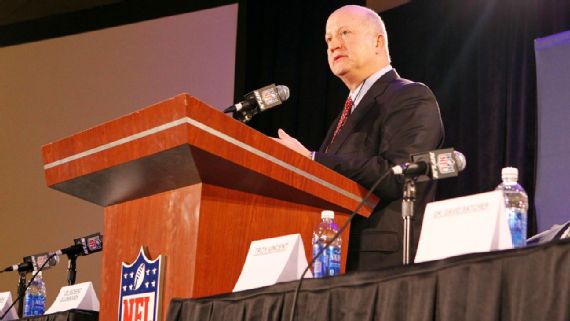
USA Cycling is at a fork in the road. They can show the sports world that this sports governance organization is institutionally mature enough to collaborate with real-world, independent experts. Or, as we have seen from WADA, FIFA, NFL and other organizations, they can go down the well-trodden path of defining "expert advice" as only that advice which fits comfortably within what they already believe or causes no one "dismay."

So USA Cycling, which will it be? 

Thursday, May 26, 2016

Ellenbogen/NFL vs. US Congress: A Case of Research Misconduct?

Earlier this week the Democratic staff of the US Senate Energy and Commerce Committee released a report of its investigation (here in PDF) into the alleged role of the NFL in trying to influence research funding decisions of the National Institutes of Health. In response, one of the academic scientists who has worked with the NFL for years, Prof. Richard Ellenbogen of the University of Washington, wrote a letter in response to the Senate Committee, criticizing the report.

Here I arbitrate this dispute, which falls right into my wheelhouse - the intersection of science policy and sports governance. I conclude that the Senate Committee is spot on and Ellenbogen's objections are substantively vacuous. In fact, the Senate Committee should have been much stronger in its critique of academics who were clearly dancing around the line of research misconduct.

The allegations levied against Ellenbogen are troubling, to say the least. Here is what the Senate report says:
Dr. Ellenbogen is a primary example of the conflicts of interest between his role as a researcher and his role as an NFL advisor. He had been part of a group that applied for the $16 million grant. After his group was not selected, Dr. Ellenbogen became one of the NFL’s primary advocates in expressing concerns surrounding the process with the BU grant selection. He not only participated on a conference call with NIH and FNIH on behalf of the NFL; he also reached out to Dr. Koroshetz separately to share that he would be unable to recommend to the NFL owners that they fund the Boston University (BU) study. This series of events raises significant questions about Dr. Ellenbogen’s own bias. It is clear that he should not have been communicating directly with Dr. Koroshetz or any other NIH staff about the grant selection process.
In his defense presented in his letter, Ellenbogen cites three objections to the report.

First, he was not interviewed by the committee:
Yesterday a report from the minority staff of your committee was released to the media alleging that I and others participated in an effort to influence an NIH grant selection process. Nothing could be further from the truth. Unfortunately, I was not afforded the simple opportunity to make this plain to your staff members, despite the fact that my contact information was provided to them and my willingness to engage with them on any question was made clear to them. I find this basic lack of fairness, combined with the disregard for the opinions and reputations of the medical professionals named in this report, to be unworthy of the important committee that you lead. At a minimum, I hope you can understand my profound objection to this maligning without so much as the courtesy of a direct question to me by your staff.
As a matter of procedure, Ellenbogen is correct. The Committee should have interviewed him, simply as a matter of comprehensiveness. However, Ellenbogen does not use the letter to explain where the Committee report is factually incorrect in any way that might have been corrected by such an interview.

Ellenbogen's second objection appears to be the focus of his defense, and he states that he is not paid by the NFL:
To be clear, I am not and never have been paid by the NFL nor have I ever received funding through the research grant dollars in question. 
This is either flat out untrue or deeply misleading, and this is easily shown. It is remarkable that Ellenbogen would make such a claim, given how ridiculous it is - his financial conflicts of interest here are many.

For instance The Seattle Times explains in an article from August, 2015:
A $2.5 million donation from the National Football League (NFL) will kick off the newly formed University of Washington Medicine Sports Health and Safety Institute aimed at advancing research, education and advocacy to prevent sports-related concussions. . . The UW institute will be led by [Dr. Stanley] Herring and Dr. Richard Ellenbogen, chairman of UW Medicine’s Department of Neurological Surgery.
And that is not all, from 2013:
University of Washington neurosurgeon Rich Ellenbogen was on the sidelines at a Seahawks game last year when he got word that “the boss” wanted to see him. That would be the top boss, team owner and Microsoft co-founder Paul Allen. “I’d never met him before,” recalled Ellenbogen, who volunteers as a neurological specialist for the Seahawks and the NFL. . . During the two-year, $2.4 million study, scientists at the UW and the Allen Institute for Brain Science in Seattle will examine the brains at the structural, cellular and molecular levels, looking for changes related to traumatic-brain injury.
Want more? Ellenbogen is listed on the NFL website as being among the recipients of $40 million in research funding from the League. He was also a co-PI on a grant proposal to the NFL-sponsored competition that is at the Center of this controversy.

The cherry on top is that as a member of the NFL's Head, Neck and Spine Committee Ellenbogen receives Super Bowl tickets and travel (Source: E&C Report), which depending on where he sits, each might be worth anywhere from $5,000 to $80,000. Coincidentally, the minimum threshold for a financial conflict of interest under NIH policies is $5,000.

Any of the examples above would on their own qualify as a financial conflict of interest under NIH policies. Such a conflict would prohibit Ellenbogen from serving as a reviewer on any funding application to NIH under a research partnership with the NFL.  It is not even close. Why he chose to take a stand on his lack of conflict is puzzling.

Ellenbogen's third objection has to do with the substance of the proposed research at Boston University that he intervened to try to stop being funded:
Medical professionals can and always will discuss priorities and debate protocols; that is healthy and appropriate. I believe strongly that there is a vital need for a longitudinal study that tracks the impact concussions have over many years. 
This objection is irrelevant. Sure, we academics can complain out in public about our objections to federal agency funding decisions. We can write blogs, op-eds and sing from the mountain tops. And we do it all the time.

What we cannot do is insert ourselves into the federal agency peer review process and try to alter it in our own preferred direction.

The Senate Committee concluded:
Although he did not violate any specific NIH rule we are aware of, Dr. Ellenbogen’s participation in these discussions contravenes the spirit of the NIH conflict of interest rules, which are designed to ensure that individuals who have a financial interest in the outcome of a grant award are not involved in the decision-making process to award such a grant.
I don't think that this goes nearly far enough. Much of the attention here has been, appropriately, focused on the NFL. More needs to be paid to academics behaving badly.

Monday, May 23, 2016

How Independent is WADA's Sochi Investigation?

Last week WADA published the Terms of Reference (ToR) for its investigation into allegations published in the New York Times of systematic, state-sponsored doping at the Sochi 2014 Winter Olympics.  The investigation is on a fast track, with a report due in less than 2 months, presumably so that the report can inform decisions about Russia's status in the Rio 2016 Olympics.

Here I focus on the structure of the investigation, and specifically the notion of independence and conflict of interest, two topics that I've written about often. Sports organizations have had a difficult time with the notion of "independent advice" and WADA is no different. Because the Sochi investigation is to play a critical role in any decision to exclude or include Russian athletes in Rio this summer, it is critical that WADA has all of its ducks in a row, regardless which way that decision goes.

The Sochi ToR explains that "an Independent Person (IP) has been appointed" -- this is Richard McLaren, who also recently served with Dick Pound on the WADA Independent Commission that looked into the last batch of allegations of systemic doping in Russian athletics (that effort had some issues with "independence" as well). McLaren is a long-time WADA collaborator, CAS arbitrator and has a stellar resume in the world of sports governance. His impressive credentials are not at issue here -- but his advertised "independence" is.

The notion of "independence" has come up as an important issue in the structure of the Sochi investigation. WADA explains:
Sir Craig Reedie acted swiftly to name Richard McLaren further to requests received by the former director of Moscow’s anti-doping laboratory, Dr. Grigory Rodchenkov; and, whistleblower, Vitaly Stepanov.  Dr. Rodchenkov and Mr. Stepanov – that are the informants for this investigation -- both expressed concerns regarding ‘independence’.  These are sentiments that were echoed by Beckie Scott, the Chair of WADA’s Athlete Committee.  Dr. Rodchenkov and Mr. Stepanov indicated that, in light of a perceived conflict of interest -- given that the allegations relate to the Sochi Olympics and that WADA is funded by the International Olympic Committee (IOC) – they would only provide evidence in their possession to an independent person.
But what is an "independent person" in this context? If you dig a bit deeper, behind the words, you'll find that that WADA's Sochi investigation is in no way "independent" and instead should be considered an internal investigation.

There is nothing wrong in organizing an internal investigation - organizations do this all the time. However, it is misleading to label such an internal activity as "independent." Let's dive into some of the details.

The ToR for the McLaren investigation do not define what it means to be an "Independent Person." The ToR states:
The IP will be bound by the Conflict of Interest policy adopted by the WADA Executive Committee in May 2011, and in this light, are required to complete and sign a Statement of Independence and Interest in accordance with such policy.
It turns out that the WADA Conflict of Interest Policy is not publicly available. I emailed WADA last week requesting a copy and they responded quickly with a copy of the Conflict of Interest Policy dated December 2015 (and not May 2011, as stated in the ToR) that was last modified 20 May 2016. I am happy to make that document available here in PDF.

Interestingly, the WADA COI Policy does not define "conflict of interest" as is standard practice in such policies - here are some examples I rounded up last fall. Here is what WADA states about COI:
Every person who is subject to the Policy shall, in the exercise of his or her functions on behalf of WADA, be free of undue influence or other factors which may give rise to a conflict between his or her own interest or the interest of any other person and that of WADA.
What does this mean?  It is not at all clear. The WADA COI Policy is so imprecise and circular that it does not mean much at all. Contrast this with the COI policies of IOC (PDF) or IAAF (link).

I have emailed WADA with the following questions:
1. Can you tell me the budget for McLaren's investigation, including his remuneration?
2. Can you share McLaren's "Statement of Independence and Interest"?
In addition, McLaren is operating under some restrictive communication policies. For instance, under the ToR McLaren is "required to sign a confidentiality agreement upon appointment" and also "must read and agree to comply with WADA’s Media Relations policy." The WADA Media Relations Policy is also not a public document, but I have requested it as well from WADA. McLaren's efforts are to be staffed by WADA officials and people from WADA labs.

To summarize:

  • McLaren is being paid by WADA;
  • WADA determines what McLaren can say and to whom;
  • WADA is staffing and overseeing the investigation.
The bottom line here is that the investigation does not look very "independent" at all. It is an internal WADA effort, being led by a long-time WADA collaborator. This may all be just fine, however, WADA has made a big deal about the "independence" of its investigation to address concerns raised by whistle blowers and athletes.  WADA has not addressed their concerns in any meaningful way.

The lack of independence of it Sochi investigation has set WADA up for problems when a decision is ultimately made on Russian participation in Rio 2016, no matter how that decision is made. 

There are a few loose ends to the above, and I will follow up as they are addressed.

Tuesday, May 17, 2016

Revisiting a Doping Cover-Up: A Guest Post by Jon Nissen-Meyer, University of Oslo

NOTE: This is a guest post by John Nissen-Meyer of the University of Oslo

In June 2013, the New York Times reported on an alleged cover-up by anti-doping officials. The paper reported that prior to the 2012 London Olympics, Italian track and field officials and the IAAF had evidence that race walker Alex Schwazer, who won gold at the 2008 Olympic Games in Beijing, used performance-enhancing drugs but that these organizations made no effort to prevent him from competing in the London games.

Schwazer was, however, ultimately  caught by WADA shortly before the 2012 London Olympics. The NYT reported, “neither the Italian federation nor the IAAF moved to stop Schwazer from competing in the Olympics.” An Italian prosecutor explained, “this circumstance can only be explained by the desire to ‘preserve’ a national track and field star for the 2012 London Olympic Games, in the expectation that he would perform well for Italy both in the 20 and the 50 km walk race.”

Now back from his doping suspension, Schwazer is in the news again after winning gold in the 50 km race-walking championships in Rome earlier this month.

On May 8, the German TV channel  ZDF had a report about Schwazer that adds further details to the possibility of a cover-up by sports officials. After about 4 minutes into the ZDF report they reveal a table showing Schwazer's blood values for the time period 2010-2012 (a screen grab is shown below). His blood values from May 21st are remarkable; they are in fact extreme and need an explanation, since they clearly suggest some type of blood manipulation or EPO doping.
His values from the spring of 2012 are also a bit suspicious, but completely "innocent" compared to the values from May 21, 2010.

Nevertheless, it seems that the values from 2012 were the ones that triggered WADA’s doping investigation against Schwazer (he was caught the last part of July 2012) and which motivated the charges against Italian and IAAF officials that they were aware that that Schwazer used EPO, but did not report it.

Schwazer states that he started using EPO winter/spring 2012 and that he informed at least one Italian doctor about it. But Schwazer claims that he never used blood doping before that, and based on this testimony, he obtained a reduced punishment, which ultimately led to his return to eligibility to race this spring.

The evidence from ZDF suggests however that Schwazer may have been doping as early as April-May 2010, which calls into question both his testimony and raises important questions for Italian and IAAF officials about the scope of a possible longer-term cover up.

In Rome earlier this month, Schwazer completely outclassed all his competitors in the 50 km World Cup in Rome and is now a favorite to win the 50 km in Rio this summer. Some of his (presumably) clean competitors are bitter about this and suspect that the whole story has not been told -- and they may be right.

There is no evidence to suggest that he is doping now, but based on the data provided by ZDF there are reasons to suspect that he may have done so before 2012.

Are anti-doping officials interested in knowing what happened? Or are they so overwhelmed by recent allegations that another possible cover-up is best left unexplored?

Thursday, May 5, 2016

A New Meldonium Literature Review

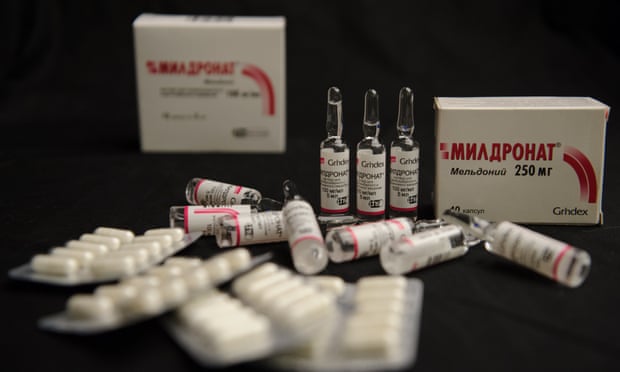
Today, Dr. David J. Greenblatt of the Tufts University School of Medicine sent me proofs of a forthcoming literature review of Meldonium, Here is the citation:

H. K. Greenblatt and D.J. Greenblatt, 2016 (in press). Meldonium (Mildronate): A Performance-Enhancing Drug? Clinical Pharmacology in Drug Development.

Here is the article's conclusion:
In sum, there is minimal evidence from North America and Western Europe regarding meldonium’s role in the treatment of disease, or whether it can produce meaningful performance enhancement in highly trained athletes. Extrapolations and recommendations based in in vivo or animal data should be weighed critically. There is also insufficient evidence to establish the temporal sensitivity of currently-used analytic screening procedures to detect meldonium use in the context of athletic competition.17 As such, the athletes’ claims described above cannot be refuted. Further study is necessary to determine meldonium’s clinical effects, if any, upon trained athletes, as well as to determine what conclusions may be drawn from positive screening results. Given that meldonium is not used clinically, experimentally, or recreationally in Western countries, satisfactory evidence seems unlikely to emerge in the near future.
The state of the science is such that Meldonium will continue to present challenges for evidence-based anti-doping.  WADA reports that 288 athletes have now tested positive for the drug. Here is my recent perspective in Newsweek on the challenges posed for anti-doping by letting regulation get out ahead of evidence.

Thursday, April 28, 2016

First Hints at Sharapova's Meldonium Concentration

Monday, April 25, 2016

Three Excellent Articles on the Current State of College Sports

Recently I have come across several really excellent articles on the current state of college sports.

First, John Gasaway (@JohnGasaway), who analyzes college basketball for ESPN, writes a thoughtful piece on why college sports are not facing an existential crisis, though the NCAA may be:
Far from being an “unstable situation,” college sports in general, college basketball more especially, and the NCAA tournament in particular instead present a series of successively smaller and progressively more advantageously situated concentric circles characterized by an unusual degree of hardiness solely as media properties. There are variables in play, naturally, and it’s not too much to term the threat of legal exposure “existential” — with regard to the NCAA. I don’t know who or what will be governing the sport in 2032, and I do trust that by then the players will have long since been receiving their fair share of the resulting revenues.

But if we view the essentials of the tournament as nothing more or less than 68 college teams playing 67 games of win-or-go-home basketball over three weeks from mid-March to early April, I’m yet to see anything even remotely persuasive in the way of a Book of Revelation. The essentials are eyeballs and basketballs, and if a tournament that earned record-setting revenues for a decade before, during and after the largest economic calamity since the Great Depression constitutes a bubble, well, put me down as bullish on this particular bubble. 
Second, Andy Schwarz (@andyhre), a sports economist, takes a good hard look at the economic realities of college sports, and makes a similar case backed by ample data. He explains:
Once or twice a year, as predictably as the launch of college football season or March Madness, we’re treated to the “everyone’s broke” meme in college sports. Sometimes it’s pegged to the football season. Sometimes we hear about it in the context of a new TV deal worth billions. And sometimes it’s tied to the release of new numbers, as was the case last week when USA Today released its trove of college sports accounting data as a resource for researchers everywhere. Along with the data they compiled, Erik Brady, Steve Berkowitz and Jodi Upton put out a companion piece addressing the familiar claim that college sports are reaching a crisis point where they will begin to crumble under their own cost. As economics professor Andrew Zimbalist says in the article, “It’s an unstable situation.” . . .

A sober reading of the history of these claims of unsustainable spending leads to a very different conclusion — specifically: NCAA expenses track with revenue and have done so for decades. But rather than hand-wringers learning from the past and ferreting out Occam’s ledger — the accounting isn’t telling the whole story — decade after decade we see similar fretting over schools losing money on college sports yet spending more and more, surely building to a “bubble” that has to burst. “This time it’s real” has been part of this sky-is-falling rhetoric for over a century.
Third, Dan Wetzel (@DanWetzel), of Yahoo Sports, looks at the dynamics underlying the flood of revenue that is coming to college sports and the political realities that result. He writes:
On Tuesday, SportsBusinessDaily reported the Big Ten is close to agreeing to a six-year deal with Fox Sports for half its television rights. It would pay about $250 million per year, or $17.9 million per school. And that's just half the deal. CBS and ESPN will pay handsomely to split the rest.

This report comes a little over a week after the NCAA agreed to an eight-year, $8.8 billion extension with CBS and Turner to broadcast the men's basketball tournament. It brings the annual value of the event from $786 million to $1.1 billion, an increase of $314 million per year.

That's new money. That's found money. That's money that has yet to be used or allocated.

It's the same as the college football playoff generating about $470 million in revenue that didn't exist three years ago. Or conference-owned cable television channels hauling in hundreds of millions. The SEC Network, which launched in August 2014, doled out $455.8 million in fiscal 2015, $31.2 million per school. The New York Times predicted last year that Big Ten Network revenue would soon exceed $40 million per school, per year.

All of this money – namely all of this brand-new money that isn't even needed – ratchets up cries to share it with the student-athletes.
 Read all three, in full. You'll be smarter for it.

Tuesday, April 19, 2016

Science and the Upcoming Rehm Ruling

German long jumper Markus Rehm wants to represent Germany in Rio this summer. He is the Paralympic champion and jumps off of a prosthetic leg (pictured above).  IAAF rules allow prosthetics in only if they are judged to provide no additional benefit to the athlete over an athlete who is not using a prosthetic.

Here is the relevant IAAF rule in full (Rule 144.3 at p. 153 in the IAAF Rules):
The German Disabled Sports Association is sponsoring a study to determine whether Rehm does or does not receive a "competitive advantage" through the use the prosthetic. The study is being conducted by the German Sports University Cologne, National Institute of Advanced Industrial Science and Technology/Human Informatics Research Institute in Tokyo and the University of Colorado-Boulder (where I am a professor). The results are expected to be reported in June.

In parallel the IAAF has created an internal Working Group to clarify Rule 144.3 which is "to bring clarity to what is a complex question of technical eligibility as soon as possible so athletes wishing to compete at the European Championships in Amsterdam and at Olympics in Rio are aware of eligibility." This Working Group is expected to report in June. It is unclear if the Group is to consider the just-commissioned study - they do state that they "will draw upon extensive knowledge from across disability and able-bodied athletics."

As we learned in the case of Oscar Pistorius, science does not always speak with one voice. In fact, the science of competitive advantage using prosthetics is like many other areas of science where a range of legitimate views are possible, based on valid assumptions and methods. Perhaps Rehm's case will be more clear cut than Pistoirus' case was - but maybe not. Rehm has already hinted at legal action if he is not allowed to jump in Rio.

Pistorius case was easier in an important respect because he was not a threat to medal in the Olympics. So his participation was framed as a feel-good story, not a story of epic achievement. Rehm is different. He threatens to medal if he is allowed to participate, and maybe even break the world record. That makes the decision to include or exclude him far more significant.

Sport turns to science to answer difficult questions with some risk, because science doesn't always have a single answer. This one may get interesting, stay tuned.

Monday, April 18, 2016

Lots of Items in the News Today

Lots of interesting stuff in the news to start the week. I'm making a list, mainly for my own benefit, but sharing it here. Please feel free to add anything else interesting in the comments.

Tuesday, April 12, 2016

University Transfers to Big Time Athletic Departments: Subsidy or Investment?

As promised, here are the NCAA Division 1 schools (from the database of athletics department budgets for 201 schools provided by The Chronicle of Higher Education) with the lowest reported subsidies to athletics.

The table includes all schools with a reported subsidy (defined as the sum of student fees and institutional transfers) of less than 20% of the athletics department's revenues. There are 45 schools that make the cut. Of these, 9 have a reported subsidy of less than $1 million (which translates to less than 1% of total athletics revenues) and 16 others are less than 5%.

Almost all of these schools are part of the so-called Power 5 conferences where there is big time athletics and big time money.

If you want to redefine what The Chronicle calls a "subsidy" intro what might otherwise be called an "investment," then each of these schools show a return of at least 500% ($5 for every $1 invested) on funds invested into athletics. At the top end of schools that receive such "investments" the return is 500 to 1 (Michigan). In any department on campus such ROI numbers would cause administrators to smile.

A decision to call such funds "subsidies" or "investments" is probably based on how one views the overall worth of college athletes beyond just dollars and cents.  Here are the numbers:
institution subsidy as % of athletics spending external revenue subsidy
156 Oregon State University 19.4% $51,016,341 $12,285,453
157 University of Colorado Boulder 19.0% $52,017,285 $12,209,473
158 Washington State University 18.6% $44,322,180 $10,104,638
159 University of Utah 17.5% $46,608,204 $9,862,106
160 University of Virginia-Main Campus 15.8% $70,462,157 $13,235,814
161 Arizona State University-Tempe 13.5% $64,656,064 $10,073,205
162 Virginia Polytechnic Institute and State University 11.1% $64,954,358 $8,110,828
163 University of North Carolina at Chapel Hill 10.8% $74,693,320 $9,078,593
164 Georgia Institute of Technology-Main Campus 10.4% $61,361,761 $7,107,777
165 North Carolina State University at Raleigh 9.5% $63,792,160 $6,708,651
166 University of Louisville 8.8% $80,976,749 $7,768,599
167 University of Arizona 7.9% $92,009,900 $7,901,134
168 Florida State University 7.6% $96,794,108 $7,980,366
169 University of Minnesota-Twin Cities 6.6% $99,165,090 $7,011,066
170 Oklahoma State University-Main Campus 6.4% $110,281,827 $7,521,475
171 University of Wisconsin-Madison 6.3% $119,837,558 $8,073,360
172 Clemson University 5.9% $70,417,577 $4,375,745
173 University of South Carolina-Columbia 5.7% $92,987,503 $5,631,976
174 University of California-Berkeley 5.5% $85,279,969 $4,982,173
175 Texas Tech University 5.3% $72,636,657 $4,086,756
176 University of Mississippi 5.1% $71,962,577 $3,886,423
177 University of Illinois at Urbana-Champaign 4.9% $76,921,197 $3,927,372
178 Mississippi State University 4.3% $59,625,111 $2,650,000
179 The University of Alabama 3.9% $147,237,173 $5,997,100
180 Auburn University 3.9% $109,331,204 $4,384,800
181 Indiana University-Bloomington 3.6% $81,660,417 $3,008,362
182 University of Washington-Seattle Campus 3.5% $96,725,508 $3,549,679
183 University of Florida 3.5% $120,302,863 $4,308,442
184 University of Georgia 3.2% $100,220,875 $3,274,712
185 University of California-Los Angeles 3.1% $83,715,508 $2,711,272
186 Iowa State University 2.9% $66,212,985 $1,957,396
187 University of Kansas 2.6% $95,116,692 $2,564,374
188 University of Arkansas 2.0% $94,857,567 $1,936,405
189 University of Missouri-Columbia 1.8% $82,203,587 $1,515,000
190 University of Oregon 1.1% $193,875,299 $2,155,099
191 Michigan State University 1.0% $103,582,498 $1,094,958
192 Texas A & M University-College Station 1.0% $118,234,414 $1,241,457
193 University of Kentucky 0.9% $95,823,941 $861,548
194 University of Iowa 0.6% $105,275,037 $683,917
195 University of Michigan-Ann Arbor 0.2% $157,643,504 $256,316
196 Louisiana State University and Agricultural & Mechanical College 0.0% $133,679,256 $0
196 Ohio State University-Main Campus 0.0% $145,232,681 $0
196 Purdue University-Main Campus 0.0% $71,372,206 $0
196 University of Nebraska-Lincoln 0.0% $94,797,692 $0
196 University of Oklahoma-Norman Campus 0.0% $129,226,692 $0
196 The University of Texas at Austin 0.0% $161,035,182 $0

Thursday, April 7, 2016

Which NCAA D1 Schools Have the Highest Reported Subsidies?

Almost all athletic departments of NCAA D1 schools receive reported subsidies from the university outside athletics. I say "reported" because the budget of NCAA schools sometimes is questioned or debated. Based on official reports (courtesy of The Chronicle of Higher Education) here are the top 25 schools (of 201 in the database of public schools) in terms of the subsidy that they receive from the broader university, where "subsidy" is defined as the sum of student fees and institutional transfers. The ranking is by proportion of the subsidy in the athletics department revenues.
institution subsidy as % of athletics spending external revenue subsidy
1 New Jersey Institute of Technology 90.6% $1,237,517 $11,899,220
2 University of California-Riverside 89.0% $1,696,085 $13,788,851
3 Central Connecticut State University 88.0% $1,771,635 $12,959,383
4 Indiana University-Purdue University-Indianapolis 87.8% $994,818 $7,184,587
5 Morehead State University 86.2% $1,491,916 $9,341,671
6 The University of Texas at Arlington 86.2% $1,628,784 $10,152,846
7 Longwood University 86.1% $1,358,361 $8,416,143
8 Winthrop University 85.9% $1,773,621 $10,775,669
9 Utah Valley University 85.8% $1,590,150 $9,601,419
10 Radford University 85.8% $1,863,266 $11,237,598
11 Stephen F Austin State University 85.1% $2,332,368 $13,364,737
12 Kennesaw State University 85.1% $2,608,908 $14,907,125
13 University of Maryland Eastern Shore 84.8% $846,088 $4,708,513
14 Stony Brook University 84.7% $4,206,726 $23,298,044
15 Northern Kentucky University 84.6% $1,837,533 $10,113,985
16 Cleveland State University 84.1% $1,818,928 $9,627,983
17 Alcorn State University 84.1% $1,010,423 $5,329,700
18 University of Missouri-Kansas City 83.6% $1,875,601 $9,592,075
19 Morgan State University 83.6% $1,522,142 $7,753,009
20 Eastern Michigan University 83.4% $4,997,815 $25,083,708
21 East Tennessee State University 82.3% $3,017,680 $14,071,113
22 George Mason University 81.9% $3,807,345 $17,207,352
23 University of South Carolina-Upstate 81.7% $1,304,471 $5,834,118
24 James Madison University 81.6% $8,042,437 $35,725,049
25 Texas A & M University-Corpus Christi 81.6% $1,940,154 $8,600,266
You'll note that all of of these schools are small, and are not what people traditionally think of when they think of big-time college athletics.  Of the 201 schools, 130 receive more than a 50% subsidy, so it is common and the numbers are significant. The median subsidy of these 130 schools is $11 million.

No matter how you do the budget accounting, it seems safe to conclude that for the majority of D1 schools, athletics is not a money-making activity. In that sense, D1 college sports is more like schools of music than the NBA or NFL.

In an upcoming post I'll take a look at the other end of the rankings where the numbers look distinctly different.

Wednesday, April 6, 2016

Meldonium: WADA, Science and Due Process

I have a piece up in Newsweek today on the Meldonium mess in sport. Here is how it starts:
The tally of athletes who have tested positive for meldonium in 2016 continues to grow, now well over 100 athletes across multiple sports. None are more prominent than Maria Sharapova, whose announcement of a positive test last month sent shockwaves through the sporting world. The issues raised by the slew of positive tests offer an opportunity to improve anti-doping regulations and to further democratize sports governance.
The argument is a preview of what I'll argue in greater depth in The Edge. Comments welcomed.

Tuesday, April 5, 2016

US Soccer MNT Elo Ratings by Coach 1990-2016

As promised a while back, US Soccer MNT Elo ratings 1990 to present, with Elo as of June of each year. Right now, the US MNT is just about where it was, relative to competition, when Bruce Arena became coach and Klinsmann as well.

Source: Elo Ratings and the ratings explained.

Verbruggen Files an IOC Ethics Complaint Against WADA and USADA

Hein Verbruggen, the former head of the UCI which oversees cycling, has filed an ethics complaint against WADA and USADA. He specifically names Dick Pound and David Howman at WADA and Travis Tygart and Bill Bock at USADA.

The basis for Verbruggen's complaint is found here, and he highlights Pound's continued claims that he helped to cover up Lance Armstrong's doping as a motivation for his complaint.  Verbruggen writes: "I would also like other people’s misdeeds to be judged objectively. It is for this reason that I have lodged a complaint against Pound, Howman, Tygart and Bock with the Ethics Commission of the IOC, a body that I trust to remain fully objective!"

However, the most serious charge appears to be this one against WADA and USADA:
Verbruggen says of WADA and USADA: " In short, their political agenda was more important to them than the fight against doping itself– and as a result the real fight against doping was abused for their political purposes."

Will this complaint go anywhere or have any significance? It is hard to tell, though the accusations levied by Verbruggen against WADA and USADA are pretty serious. We shall see what happens with the IOC..

Monday, April 4, 2016

How Much do State Universities Subsidize Athletics? Part 1 - Aggregate

Late last year, the Chronicle of Higher Education provided reported budget data for the period 2011 to 2014 more than 200 state universities which compete under the NCAA's Division 1. That data allows for some interesting analyses.

The graph at the top of this post shows how subsidies for athletics changed from 2011 to 2014 as a proportion of total state higher educational revenues (black line). The total state higher educational revenues come from data collected by the State Higher Educational Officers Association (specifically, Table 3 in this PDF, note 2010 is extrapolated).  The graph also shows how external funding of athletics across all of these 201 schools as a proportion of total state higher educational revenues.

The data shows that external funding of athletics in 2014 i\was about 4% of total state school educational revenue and the state subsidy was about 1.6%. Following the Chronicle, the "subsidy" is defined as the sum of institutional transfers to athletics plus student fees for athletics. If you add the two numbers together you'll get the total revenue for athletics. You can divide that by total state higher educational revenues across the 206 schools to get a sense of the comparative size of athletics of that total, which was about 5% in 2010 and about 5.6% in 2014.

Some additional data for 2014:
  • Total educational revenue = $136.7 billion
  • Total athletics spending = $7.5 billion
  • Subsidy of athletics = $2.2 billion
  • External funding of athletics = $5.5 billion
In a follow up post I will look at individual schools.

Saturday, April 2, 2016

How Much Do FBS Schools Spend on Coaches, Part 2?

This post dives a bit deeper (part 1 is here) into the salaries of coaches at FBS universities (the highest level of college football program schools) based on updated data from the Knight Commission.

The graph above shows how much three different schools spend on coaches: Ohio State, which tops the table, spends over $26 million. At the bottom of the 106-school table is the University of Louisiana-Monroe at $2.6 million, about 10% of that spent by OSU.  Somewhere in the middle (#43) in my employer, the University of Colorado-Boulder at $12.6 million, just about half of OSU.

Let's compare these expenditures to total university budgets.
The graph above shows no surprises. OSU has a $5.5 billion budget (source), which is larger that Colorado-Boulder at $1.3 billion (source) and absolutely dwarfs ULM at $75 million (source).

When we look at coaches salaries as a percentage of total campus budgets things get considerably more interesting.
The graph above shows that ULM spends five times as much as Ohio State when spending is measured as a proportion of the total university budget. This suggests that coaching salaries might be a rounding error in the total OSU budget, but are much more significant at a small school like ULM.

What can we say about the total spending on coaches salaries across all 106 FBS schools?

A full accounting would require going into the budgets of each of the 106 schools, but we can do a quick back of the envelope calculation. The midpoint between OSU and ULM for total campus budgets is about $2.8 billion. Across 106 schools that suggests almost $300 billion in budgets. If you want a conservative lower bound we can cut that in half and use $150 billion.

The Knight Commission database tells us that the 106 schools collectively spend about $1.2 billion on coaches salaries - about the size of the total campus budget for the University of Colorado-Boulder.

So the total expenditure on coaches salaries across the 106 FBS schools, as a proportion of total university budgets,  is $1.2 billion divided by $150 billion at the low end and $300 billion at the upper end. This is about 0.8% to 1.6% of total university spending or about 1% in a round number. Overall athletics spending across these programs is more like 5% of the total budgets.

Is 1% of university spending on coaches a lot? A little?  Top line numbers like those at Ohio State capture most of the discussion, but the impact on the university may be far greater in places like Louisiana-Monroe.

This data does not answer questions at the heart of debates over college sports, but they should inform that discussion.

Friday, April 1, 2016

How Much Do FBS Schools Spend on Coaches?

Above is the spending that 106 FBS tracked by the Knight Commission spent on coaching in 2014, the most recent year in its database (click to embiggen).

The total expenditure is just about $1.2 billion, which is about the size of a a major research university like the University of Colorado, where I am a faculty member.  In other words, the nation's top 106 athletic programs spend about 1 research university-worth of dollars on athletics coaches.

Here is a table of the top 50:

1 THE OHIO STATE UNIVERSITY $26,460,182
2 THE UNIVERSITY OF TEXAS AT AUSTIN $25,375,094
3 THE UNIVERSITY OF ALABAMA $23,159,068
4 PENNSYLVANIA STATE UNIVERSITY $22,746,542
5 UNIVERSITY OF OKLAHOMA $21,918,720
6 UNIVERSITY OF MICHIGAN $21,683,893
7 LOUISIANA STATE UNIVERSITY AND AGRICULTURAL & MECHANICAL COLLEGE $21,139,585
8 UNIVERSITY OF LOUISVILLE $20,884,261
9 MICHIGAN STATE UNIVERSITY $20,884,258
10 AUBURN UNIVERSITY $20,371,279
11 UNIVERSITY OF KENTUCKY $20,257,669
12 UNIVERSITY OF FLORIDA $20,206,975
13 UNIVERSITY OF CALIFORNIA-LOS ANGELES $18,764,600
14 TEXAS A & M UNIVERSITY $18,409,833
15 UNIVERSITY OF SOUTH CAROLINA $18,277,553
16 UNIVERSITY OF VIRGINIA $18,089,569
17 UNIVERSITY OF IOWA $17,404,934
18 UNIVERSITY OF ARKANSAS $17,137,702
19 FLORIDA STATE UNIVERSITY $17,020,714
20 THE UNIVERSITY OF TENNESSEE $16,933,891
21 UNIVERSITY OF GEORGIA $16,847,388
22 UNIVERSITY OF WASHINGTON $16,812,513
23 ARIZONA STATE UNIVERSITY $16,713,127
24 UNIVERSITY OF OREGON $16,283,951
25 UNIVERSITY OF MISSOURI-COLUMBIA $16,211,134
26 UNIVERSITY OF CONNECTICUT $16,197,062
27 UNIVERSITY OF WISCONSIN-MADISON $15,931,618
28 UNIVERSITY OF NEBRASKA-LINCOLN $15,589,712
29 INDIANA UNIVERSITY-BLOOMINGTON $15,569,609
30 CLEMSON UNIVERSITY $15,474,254
31 OKLAHOMA STATE UNIVERSITY $15,291,172
32 UNIVERSITY OF ARIZONA $15,267,187
33 UNIVERSITY OF CALIFORNIA-BERKELEY $14,669,054
34 WEST VIRGINIA UNIVERSITY $14,588,974
35 NORTH CAROLINA STATE UNIVERSITY AT RALEIGH $14,395,344
36 UNIVERSITY OF MARYLAND-COLLEGE PARK $14,162,812
37 UNIVERSITY OF MISSISSIPPI $13,729,892
38 UNIVERSITY OF CINCINNATI $13,707,453
39 UNIVERSITY OF NORTH CAROLINA AT CHAPEL HILL $13,642,676
40 UNIVERSITY OF KANSAS $13,359,816
41 KANSAS STATE UNIVERSITY $12,947,255
42 VIRGINIA POLYTECHNIC INSTITUTE AND STATE UNIVERSITY $12,765,778
43 UNIVERSITY OF COLORADO BOULDER $12,605,932
44 PURDUE UNIVERSITY $12,532,279
45 UNIVERSITY OF MINNESOTA-TWIN CITIES $12,137,176
46 GEORGIA INSTITUTE OF TECHNOLOGY $11,855,296
47 MISSISSIPPI STATE UNIVERSITY $11,825,452
48 OREGON STATE UNIVERSITY $11,776,500
49 TEXAS TECH UNIVERSITY $11,661,855
50 IOWA STATE UNIVERSITY $11,519,206

No April Fools: Can You Beat this Bracket?

Via the NCAA, the bracket above was filled out by an Indiana high school student. It serves a a nice parable on expertise. The student, Rebecca Gentry worried: "I thought I was already failing with two mistakes."

She was asked about the source of her prognosticative ability:
“I am not really a sports person,” she said over the phone Thursday night.

For instance, does she know anything about seedings? Syracuse at No. 10? “Nope.”

Can she name one player in the Final Four? “Uhhhh …. no. I know faces and stuff. I really don’t know much beyond that.”

She’s not a Final Four expert, then? “I didn’t know there were levels. I didn’t know there was best eight, or whatever. Or Final Four. I didn’t realize there was any of that. I thought they just kind of played basketball.”

For that matter, has she ever seen a basketball game in person in her life?

“I think I might have went to one in middle school, if that counts. Actually I have been to one in high school. The Globetrotters were there. I think that’s what they were called. And I worked the concession stand once, but I didn’t get to see any of the game because I was mostly handing out nachos.”

But she did fill out a bracket because it was for bonus points. “When he first handed the assignment out, I thought I’m not doing this, I don’t know what any of this means, maybe I’ll copy somebody’s."
Meantime, my naive-bracket based on higher seeds is beating 75% of ESPN entries.