Thursday, April 27, 2017

Twitter Talk: Scientific Integrity and Anti-Doping Regulation

I have just embarked on an experiment in communication. I have created a "TwitterTalk" of my presentation yesterday at the Norwegian Academy of Sciences and Letters. The talk is titled "Scientific Integrity and Anti-Doping Regulation."

You can see the whole thread starting here.

Comments welcomed as it is a paper in progress.

Tuesday, April 18, 2017

Oslo Forum on Doping with Independent Experts: 26 April

Doping: science, ethics and law

Location: Norwegian Academy of Science and Letters, Drammensveien 78, Oslo, Norway
26. April 2017 15:00

Sport has great social importance and popularity, requires large resources and receives much public attention. But the sport's values ​​are challenged by doping. In Norway, processes against Martin Jonsrud Sundby and Therese Johaug have triggered vigorous debates on the relevant issues. Why are these matters so important? Is there a good match between people's sense of justice and what is actually happening in anti-doping matters? What rules are applicable? How should anti-doping work be regulated? Good answers require informed debate based on ethical, scientific and legal expertise.

If you'd like to attend register here.

Program
  • 15.00: Opening by the president of the Academy, Ole M. Sejersted
  • 15.05: Roger Pielke, jr., Univ of Colorado: Scientific Integrity and Anti-Doping Regulation
  • 15.35: Michele Verroken, Sporting Integrity, Ltd.: Does anti doping serve sports and athletes or its own interests?
  • 16:05 Sigmund Loland, Norwegian School of Sports: The Ethical Dilemmas of doping
  • 16.30: Coffee break
  • 17.00: Jens Evald, Universitu of Aarhus: Anti-Doping - The balance between efficiency and the rule of law
  • 17.25: Erik Boye, Oslo University Hospital: Scientific variability and fallibility
  • 17.45: Odd O. Aalen: Statistical aspects: How to evaluate the uncertainty of diagnostic tests
  • 18.00 Discussion & invited comments
  • 19.00 End
Roger Pielke, Jr. has been on the faculty of the University of Colorado since 2001. He is the director of the Sports Governance Center within at the Department of Athletics, having Previously directed the university's Center for Science and Technology Policy Research. Pielke is the author of The Honest Broker: Making Sense of Science in Policy and Politics and The Edge: The War Against Cheating and Corruption in the Cutthroat World of Elite Sports.

Michele Verroken is a qualified arbitrator, mediator and adjudicator, a former teacher and lecturer in sports science and physical education. She is the founding director of Sporting Integrity and the Director of Ethics and Anti-Doping at UK Sport, Michele created the UK's Drug Information Database, education programs The, Independent Doping Control Officer training and national anti-doping policy based on ISO-certified standards. Michele has significant experience in anti-doping programs The at national and international level.

Sigmund Loland is professor of sport philosophy and the Rector of the Norwegian School of Sport Sciences (2005-2013). He has published extensively within at sports ethics, the ethics of performance-enhancing technologies, epistemology of movement, and the history of ideas in sports. Dr. Loland ice forms President of the International Association of the Philosophy of Sport (2002-03) and the European College of Sport Science (2011-13), and he is member of the Ethics Board of the World Anti-doping Agency (WADA ) (2004-).

Jens Evald is professor of sports law; Head of Sports Law Research Unit, Institute of Law, Aarhus University; Member of the Board of the Institute of Sport (1998-2007); Chairman of the Dispute Resolution Committee, Danish Kayak & Canoe Federation (2000-presented); Vice Chairman Danish Sports Law Association (2001-2005); Chairman of the Board of Anti-Doping Denmark (2006-2012); Member the Political Commission, Danish Football Association (DBU) (2016-2017). He is author and co-author of more than a dozen books and numerous at articles. His work includes books and articles on private law issues, legal history, legal philosophy, biographies and sports law.

Erik Boye is retired professor and department head, Institute for Cancer Research in Oslo. With a background in experimental cell biology and biochemistry he has a long experience with Biochemical analytic techniques. Through the last five years he HAS BEEN Involved in Evaluating the quality of anti-doping analyzes.

Odd O. Aalen is professor of biostatistics in the Medical School at the University of Oslo. He has beenworking on statistical methodology Applied two medical research. He Also has an interest in the statistical aspects of diagnostic testing.

Friday, March 17, 2017

Talk at UF on "Sex Testing" in Sport

I gave a talk at the University of Florida earlier today on "sex testing" in international sport. I have attached the slides as a PDF here. The talk comes from The Edge, and is also the subject of a more technical discussion currently in late stages of peer review.

Comments always welcomed!

Wednesday, March 1, 2017

Foxes in the Henhouse

Yesterday, the House Energy and Commerce Committee held a hearing on anti-doping that featured testimony of Olympians Adam Nelson and Michael Phelps. The hearing also included testimony of Travis Tygart, head of the US Anti-Doping Agency as well as representatives of the IOC and WADA,

Tygart argued for "a clear separation between those who promote sport and those who police it. To do so otherwise, we believe, is to encourage the fox to guard the henhouse" (PDF). Tygart, and others, are arguing for the IOC, and other organizations of the Olympic Movement, to recuse themselves from the administration of anti-doping regulations in sport. Such a fix, Tygart suggests is "easy."

Tygart is right about the fox in the hen house, but he is wrong about the fix being easy. This post goes into a bit of the institutional history behind IOC's tight grip on WADA to set the stage for discussions of how the fox might be excused from the hen house.

Earlier this week comments by officials at IOC and USOC illustrated the different incentives faced by anti-doping regulators and organizations of the Olympic Movement. For instance, a Russian IOC official commented on Tygart's passionate anti-doping agenda:
"Fighting with an organization responsible for giving future Olympic Games — it’s a big mistake. This gentleman [Tygart] is doing a very counterproductive job with respect to the Los Angeles [2024] bid."
The head of the USOC said of Tygart:
"Travis’s style, I would be lying if I told you it wasn’t having an impact [on the LA 2024 bid]. At the end of the day, he’s doing his job, and he’s doing it really well. Would we like him to be a little bit more of a silver-tongued devil? Yes, we would."
If you are new to the world of sport let me translate all that: These administrators of leading Olympic sports organizations would prefer that USADA tone down its efforts to improve anti-doping regulations and governance around the world. The reason for this is that anti-doping efforts can lead to scandal and a stain on sport and the organizations that govern it. 

These dynamics are not new and can be traced to the origins of WADA in the late 1990s. At that time the IOC was reeling from a bribery scandal of its own making related and the world of sport had just suffered a big black eye due to doping revealing by the so-called Festina affair at the 1998 Tour de France.

Something had to be done.

So in response the IOC moved to create an "Olympic Movement Anti-Doping Agency," Right away many of those interested in anti-doping reforms saw this proposal to be highly problematic. General Barry McCaffery, who was President Bill Clinton's head of the Office of National Drug Control Policy with jurisdiction over matters related to sports doping, testified before the US Senate in 1999 on anti-doping reforms underway under the auspices of the IOC. He stated:
"IOC is rushing forward to build an institution that we cannot support-- one which is more public relations ploy than public policy solution. . . The proposal should have stronger guarantees that the agency  will be independent and operate based on basic principles of good  governance and democracy, such as transparency and no conflicts of interest."
Also testifying that day was Frank Shorter, US Olympian who had won a Gold Medal in the Marathon. He agreed:
"everything  possible should be done to avoid even the hint of a conflict of  interest. This obviously means no IOC control"
So too did Prof. Doriane Lambelet Coleman, of Duke University Law School:
"the reason it is so critical that the IOC and USOC  both externalize and make independent their drug testing operations is that they are neither willing nor capable, as a structural matter, of conceiving and administering a fair and effective drug testing program."
The pressure being put on IOC by the US and Europe meant that they had to give up their desire to own the new anti-doping agency. Instead, they had to settle for partial ownership. 

Richard Pound, a Canadian lawyer and I.O.C. vice president, who is drafting a proposal on the agency to be considered by the conference on Thursday, acknowledged that the I.O.C. has had to scale back its plans to be at the center of the agency. Pound said national governments would have a much larger role than anticipated, a reflection of the widespread skepticism about the I.O.C.'s leadership ability in the wake of the burgeoning bribery scandals involving host cities. . . Pound said it was possible the new agency, if approved, would have as much as 50 percent representation from public authorities, whereas before the conference the I.O.C. had anticipated no more than 20 percent. It was an indication of the increasing inclination of governments to take anti­doping enforcement out of the hands of sports bodies . . .
Ultimately, it was a 50% split in governance responsibility between governments and sports organizations that came to characterize how WADA was run, and that split still exists today. In practice, however, it is fair to question how much of a role governments actually play in the oversight of WADA, Consider that the US government representative to WADA listed on its website today, Michael K. Gottlieb, left the US government in 2015. I do not recall any instance of a government official on the WADA Board speaking for the organization - it s always sports people.

There is nothing in the international treaty on anti-doping that dictates how WADA is to be governed. In practice, to change the composition of the WADA governing committee (its "Foundation Board") requires a super-majority of 2/3 votes of its 38 members. Currently on this committee  there are 19 members from the Olympic Movement including 5 IOC Members, one of whom is the WADA president. To remove the fox from the hen house would thus require many people from sports organizations to vote themselves out of a job at WADA. It is hard to envision how this might happen.

One consequence of the tight grip that the IOC (and its related organizations) have on WADA can sure be seen in how WADA implements sanctions for violations of its Code.  Consider the case of Russian athletes who were part of the institutionalized doping scandal revealed over the past several years. Below is a list of organizations and individuals culpable in the scandal as argued in the four recent WADA reports (by Pound & McLaren).
  • Russian athletes
  • Rusada
  • ROC
  • IAAF
  • WADA
  • IOC
I have highlighted in RED where WADA has jurisdiction to sanction. 

That is right -- WADA has no ability to sanction sports organizations of the Olympic Movement, as the WADA Code focuses almost exclusively on athletes caught doping, not corrupt organizations or people in them. This is why in the lead up to the Rio Olympics last year WADA sought to ban all Russian athletes from the games, but instead IOC delegated the task to each international federation to sort out, leading to ad hoc and arbitrary decisions. 

Similarly, the fact that the IAAF leadership was extorting athletes for money to cover up positive doping tests is not a violation of the WADA Code -- if it were then the IAAF could be found non-compliant, and potentially suspended or otherwise sanctioned as a governing body for Athletics. Imagine that. Does anyone really think that sports organizations would willingly expose themselves to such oversight?

Getting the fox (IOC) out of the hen house (WADA) is thus no easy task. For its part the IOC responded to yesterday's hearing by stating that: "As for WADA’s governance, we hope to make it more independent from both sports organisations and governments."

Yet, it is not clear that IOC really understands what "independent" actually means in the context of governance (a failing not unique to IOC in the world of sports). Consider that IOC also says that it has "appointed independent experts for the WADA governance working group to give independent advice on how best to reform the governance of WADA." These "independent" experts are a lawyer for the IAAF and a CEO of a national sports federation, perhaps great guys but hardly independent of the Olympic Movement or the IOC. 

The notion of getting the foxes out of the hen house this raises some important questions:
  • If the foxes are to leave the hen house who is to replace them?
  • Who are these "independent" people who will oversee WADA?
  • Should all sanctioning be delegated to CAS?  And if so, then shouldn't CAS itself become more independent of the Olympic Movement?
  • Is it time to consider more radical solutions to anti-doping governance, perhaps such as WHO, UNESCO, private sector, etc.?
  • Who watches the watchers? to who are anti-doping regulators to be accountable too?
None of this is easy.  And this is just the governance structure -- I have not mentioned issues associated with the substance of the prohibited list, scientific integrity standards, athlete due process and participation and other important aspects of WADA reform.

Doping is endemic in elite sport. The organizations tasked with regulating doping aren't working. In fact, some sports organizations are working at cross-purposes to anti-doping. There is a lot of work to be done here.

Bibliography


Copenhagen Declaration on Anti-Doping in Sport, 2003. (PDF)

Hanstad, D. V., Smith, A., & Waddington, I. (2008). The Establishment of the World Anti-Doping Agency A Study of the Management of Organizational Change and Unplanned Outcomes. International review for the sociology of sport, 43:227-249.

International Convention Against Doping in Sport - UNESCO, (PDF) Background document: (PDF)

Lausanne Declaration, 1999. (PDF)

Teetzel, S. (2004, October). The road to WADA. In Seventh International Symposium for Olympic Research, October (pp. 213-24). (PDF)

Monday, January 23, 2017

Bloodgate Short


I'm posting this here for future classroom use. It is a Sky Sports Short on "Bloodgate" - some great footage here. (HT Alex)

Sunday, January 8, 2017

A List of Elite Athletes Falsely Accused of Doping

There are enough cases of elite athletes falsely accused of doping that I thought I'd start a list. The list below includes cases where the evidence is strongly suggestive, at least, that the athlete was falsely accused by WADA (or other organizations) of having violated the provisions of the WADA Code.

Below I list the athlete, the sport and the drug that the evidence suggests that the athlete was falsely accused of taking. Click on the athletes name for supporting information. I welcome any comments or suggestions to the list.
The consequences to an elite athlete of being falsely accused of doping can be career ending. I will update this list as warranted.

Thursday, December 8, 2016

Review of the Professional Cyclists’ Union, A Guest Post

This is a guest post from Steve and Joel at The Outer Line.

Review of the Professional Cyclists’ Union

The Cycliste Professionnels AssociĆ©s (CPA), formed in 1999, had two important early accomplishments - the “Joint Agreement” with the teams to help govern the relationship between teams and their riders, and a riders’ “Solidarity Fund” -to provide limited financial support to certain retiring riders.  However, the CPA has struggled to grow or expand its influence very much in pro cycling over the intervening fifteen years.  A recent review and assessment by The Outer Line takes a detailed look at the performance and operations of the CPA, evaluating how well the organization has complied with its own by-laws, and benchmarking its performance against a widely-accepted set of external sports governance guidelines.  Although clearly hamstrung by its historical financial and human resources constraints, the CPA nevertheless rates fairly weakly in terms of complying with accepted governance standards - particularly in terms of its financial management and the general transparency of its operations.  The Outer Line report describes the current  risks and the future opportunities by which the CPA might play a greater role in pro cycling, and provides a set of eight specific recommendations for how the CPA can become more powerful in the future.   The report argues that a stronger cycling union would actually strengthen the overall sport, and would actually be good for the other key stakeholders in the sport, pointing out that other pro sports made their greatest leaps in popularity and revenue following the development of a more powerful voice for the athletes. 

An executive summary of the report can be found here, and the full 15-page report is available to be downloaded here.

Wednesday, November 30, 2016

Lab Times Exchange on Problematic Doping Conviction of Steven Colvert

Today, Lab Times has published an exchange between WADA (Christine Ayotte) and the team of Norwegian scientists who first raised questions about the problematic doping conviction of Irish sprinter Steven Colvert. For background see: here and here and here.

WADA's response comes in the form of a version of the letter first posted on the WAADS website last month, which I discussed here. Ayotte's main response is to appeal to authority:
While it may sound seemingly insignificant to refer to 'WADA’s credibility', this oneside vitriolic opus is a charge against skilled, experienced scientists. The SAR-PAGE and IEF data presented are of excellent quality, the results clear and convincing. The methods, the interpretation of test results were published in the peer-reviewed scientific literature (more than 40 research articles from anti-doping scientists) and so were the criteria for issuing positive findings that are available on WADA’s website.
Let me point out what should be obvious: everyone in this issue is an expert. All have impressive degrees, publications and long CVs. Appealing to authority doesn't get you very far. In fact, with various WADA labs suspended around the world, including for improper false positive results, now is probably not the time to appeal to WADA's authority. Ultimately, what really matters here is evidence and procedure.

The team of Norwegian scientists (Jon Nissen-Meyer, Erik Boye, Bjarne Ƙsterud,Tore Skotland) respond in the same issue of Lab Times.  They note the appeal to authority presented by Ayotte, and push back against the idea that it is improper to discuss this issue in the academic literature:
It is fair to say that Ayotte presents no scientific arguments against the assessments we make in our article. She claims that the scientists involved in analysing Colvert’s urine sample were highly competent and that the methods applied (PAGE, IEF) are widely used and have been the subject of many publications. We are not convinced that these matters determine whether the data were correctly obtained, interpreted and presented. More importantly, they certainly cannot determine whether or not problematic and inconsistent results should be subject to public discussion.
The exchange does get into some very important substance.

First, Ayotte criticizes the Norwegian scientists for not presenting their own data. This is of course ironic because WADA destroyed the original samples and has thus far refused to make available the original images from the case to either Colvert or the Norwegian researchers.

But the original data is probably not even necessary to resolve this case. The most important aspect of the exchange is that Ayotte repeats her claim that WADA scientists made mistakes in their evaluation of the data in Colvert's case:
If the laboratory expert was correctly quoted, he made a mistake when he stated that the amount of recombinant was small when compared to the endogenous EPO.
The Norwegian scientists, in their response to Ayotte, document that indeed the expert was correctly quoted making this claim, as was a second WADA expert. They write:
Ayotte clearly states in her letter that the laboratory experts are incorrect in their judgments of the PAGE results, and thus there is a disagreement among WAADS experts in the interpretation of the results used to convict an athlete for doping. We maintain that if the experts in the hearing are correct about the low level of rEPO in the PAGE analyses, the hearing should have concluded that the analyses are not consistent with one another and the case should have been dismissed. Alternatively, Ayotte’s interpretation is correct, in which case she has to explain how she can see such a large amount of rEPO in a gel where other people experienced in interpreting PAGE tests, including experts from two WADA labs, see little or nothing.

Either way, something is not right here.
The Norwegian researchers are correct. With WADA scientists in open disagreement on the data in this case and a team of independent researchers having published a critique of the application of WADA guidelines, that should provide sufficient evidence to overturn the Colvert judgment.

I don't know if Colvert doped and neither do you. Nor does WADA. At this point proof of guilt or proof of innocence is probably not forthcoming. But that is the point. Colvert should be presumed innocent until proven guilty, and WADA's evidence does not prove him guilty.

Here is a big problem that Colvert and other athletes falsely convicted face: An expert familiar with the case tells me that for Colvert to take on WADA with a legal challenge would cost him more than $200,000, just to start. That would appear to be prohibitive for Colvert, based on media reports.

So even as the scientific literature and the court of public opinion appear to indicate that Colvert was wronged by anti-doping authorities and procedures, he essentially has no recourse to right the wrong. His athletic career has been derailed and that won't change. But it is not too late for Irish Sport, in particular, to do the right thing in support of one of its athletes.

Mistakes can be made, even in the best run processes. How organizations respond in the face of evidence of mistakes says far more about the integrity of those organizations than the mistake itself.

Irish Sport, do the right thing.

Tuesday, November 29, 2016

My November Daily Camera Column: Going Pro in Sports


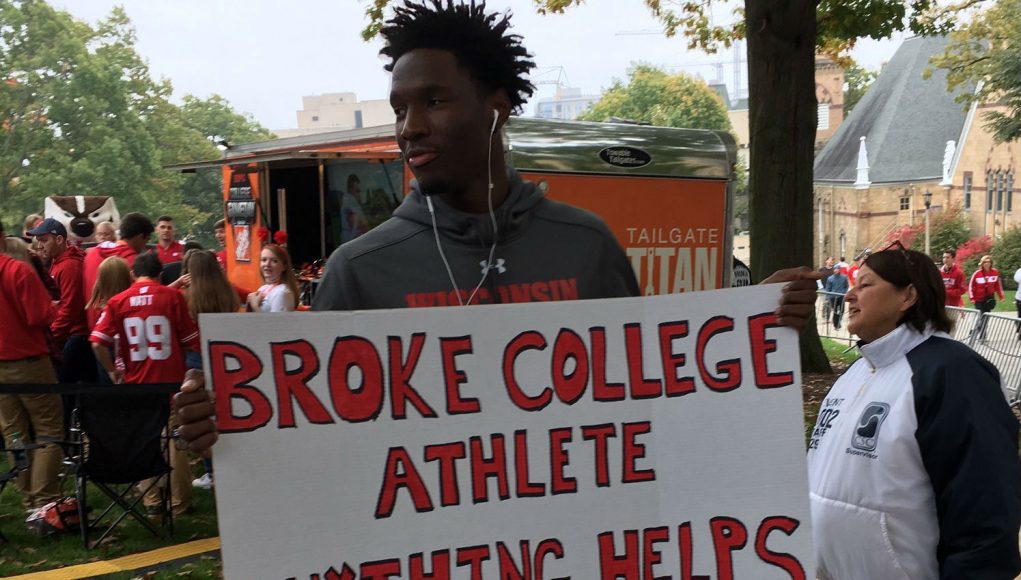
In my column this month for The Daily Camera I look at data on prospects for top-level men's basketball and football players to make it to the pros. The NCAA, in its ubiquitous commercial (shown above), tells us that the vast majority of college athletes go pro in something other than sport.

While this is true, it does not accurately represent what happens at the highest levels of college sport. It turns out that in top-level football and basketball programs scholarship athletes have a considerable chance to "go pro" in their sport. In the article I show numbers indicating that perhaps 20% of Power 5 football players go pro and 59% of D1 basketball players go pro.

These numbers raise some important questions about how we at universities structure athletic programs. We are in fact preparing such students for professions in athletics. They are not simply college students who do sports on the side.

Here are some links for those interested in digging deeper.

  • The analysis depends on the excellent work done by Nick Harris (@sportingintel)  in the Global Sports Salaries Report. Here is the latest version. The data that I use comes from the 2015 edition.
  • I developed the analysis over the past few years via several blog posts and commentaries: NFL analysis (here) and NBA analysis (here and here), 
  • Here is the NCAA data on basketball players that go pro, and here is the data for several other sports,
  • Finally, here is a recent op-ed I had in the NYT on the idea of degrees in sport in big-time athletic programs.
Comments/questions welcomed!

Monday, November 28, 2016

A Summary of Olympic Drug Re-Testing So Far

This is a guest post by Bill Mallon (@bambam1729), Past President and Co-Founder of the International Society of Olympic Historians, and Hilary Evans (@OlympicStatman), a founding member of the OlyMADMen - an Olympic statistics group. Both are incredible resources on Twitter and worth a follow. This post appears on their blog here as well.

A Summary of Olympic Drug Re-Testing So Far

Over the last few months, the media has been awash with stories about positive doping findings from the 2008 and 2012 Olympics, after the International Olympic Committee (IOC) mandated re-testing of the samples from the London and Beijing Games, using more modern methods of detecting performance-enhancing drugs (PEDs). It has been difficult to follow, as the press releases from the IOC have come in flurries, and there is confusion as to how many athletes have been affected and how many medals will be re-distributed.

To date, however, there has not been a summary of the number of positive tests, the types of substances used, and which sports and nations were most affected. Although there were some suspicions based on the press releases, it seems appropriate to produce such a summary, although admittedly, it may well be a work in progress, as the re-testing is ongoing.

First of all, our sources are mainly the IOC press releases and releases from the Court of Arbitration for Sport (CAS). All of the IOC press releases can be found here. The IOC press releases contain summaries of the decisions, but at the end of each summary they note “The full decision is available here” with a link to a PDF of the full decision. CAS decisions are available on their website here, under Jurisprudence --> Recent Decisions, or Database. Only cases that have been appealed to the CAS will have a ruling by that body. In a few cases, in attempting to find the specific substances named, we have relied on press reports, although that has been rare.

Now to the summary. The decisions have been coming from the IOC since April of this year, with the most recent one released on 25 November 2016. During that time 99 athletes from the 2008 and 2012 Olympics have been sanctioned on re-testing for PED use. There are actually 104 cases, as 5 athletes have tested positive for both the 2008 and 2012 Olympics, as follows:

• Hripsime Khurshudyan (F¬¬–ARM / WLT)
• İntiqam Zairov (M–AZE / WLT)
• Oksana Menkova (F–BLR / ATH)
• Ilya Ilyin (M–KAZ / WLT)
• Maiya Maneza (F–KAZ / WLT)

Here is the breakdown by nations of the 104 offenses:
Of note, fully 86 of the 104, or 82.7%, come from nations from the former Soviet Union.

Which sports have been the most affected? If you’ve been following this, you surely realize that athletics (track & field) and weightlifting seem to have been mentioned the most, and that is accurate. In fact, 92.3% of the sanctions have come from those two sports, with athletics having 49 offenses, and weightlifting 47. The others sanctions have come from wrestling (5), cycling (2), and swimming (1).

What have they been taking? The various sanctions have been for 14 different substances, in many cases with the athlete(s) taking 2 or more PEDs, but by far the most frequently used PEDs were Turinabol (64 cases) and Stanozolol (36 cases). The full breakdown is as follows:
The total is much more than 104 because of the athletes taking multiple substances. Also note that 14 cases are for abnormalities in the biological passport, in which cases we do not always know the precise substances involved.

Of the above, Turinabol, Stanozolol, Oxandrolone, Drostanolone, Methandienone, and 3a-hydroxy-5a-androst-1-en-17-one (there will not be a pop quiz on this) are anabolic steroids. GHRP-2 is a type of growth hormone releasing peptide, a stronger analogue of the older GHRP-6, with fewer side effects. 

EPO is erythropoietin, which increases red blood cell volume, and thus may increase oxygen carrying capacity by the blood, and is usually used by endurance athletes. One of these cases was used by a mountain biking cyclist, Blaža Klemenčič (SLO), but the other case was in a Russian weightlifter.

Ipamorelin is not often detected but stimulates growth hormone secretagogue receptors, which then stimulate growth hormone release. Methylhexanamine is a sympathomimetic drug, meaning it stimulates the sympathetic nervous system – the section of the nervous system responsible for the “fight or flight” phenomenon. It is used as a stimulant or dietary supplement and may be helpful in keeping weight down.

Acetazolamide is a diuretic which increases urine formation. It has no performance enhancing effects, but is used by athletes to dilute the urine, and thus decrease the concentration of other drugs in the urine, ostensibly to allow them to defeat the tests.

Finally, tamoxifen affects estrogen receptors and is best known as a treatment for women with breast cancer. It is used by athletes to mask the effects of anabolic steroids, especially gynecomastia, or production of breast tissue in men.

By far the two biggies above are Turinabol and Stanozolol. Turinabol was invented in the former East Germany (GDR) – no big shock there. It’s chemical name is variably known as dehydrochloromethyltestosterone, or chlorodehydromethyltestosterone. It is a derivative of testosterone, the male anabolic-androgenic steroid, which has been modified by attachment of a hydroxyl group (-OH), a choride ion (-Cl), and a methyl group (-CH3) to the basic sterol molecule. Turinabol was the main drug used the East German state-sponsored doping program, as later revealed by the release of documents from the Stasi, or East German secret police.

Stanozolol is another anabolic-androgenic steroid created by modifying the testosterone molecule by the addition of a hydroxyl group and three methyl groups. Stanozolol was best known by bodybuilders and other strength athletes as Winstrol, and was the drug that caused Ben Johnson to have a positive doping test after the 1988 Seoul Olympics 100 metre final.

It should be noted that despite many rumors about poor drug testing programs in Kenya and Ethiopia, which could benefit their outstanding distance runners, there were no positive re-tests from either of those nations. Now, it should be noted that those athletes would be most likely to use EPO, and tests for that are difficult, and involve checking for reticulocytes (a type of immature red blood cell) in the blood. After 4 or 8 years, it’s not certain how valid that test would be.

One question many people have is how many medals will be lost and who will they go to? The second part of that is difficult to answer and we’ll address it in a bit. In all, 52 medals have been lost because of the re-testing – 14 golds, 18 silvers, 20 bronzes. The most affected athlete is Kazakh weightlifter Ilya Ilyin, who loses gold medals from both 2008 and 2012. In this case, weightlifting is much more affected than athletics, losing 35 medals (8 golds, 7 silvers, 18 bronzes) to athletics’ 17.

Here are the nations most affected in terms of medals lost:
So who will these medals go to. Sorry, can’t help you there yet, at least not officially. The way that medals are redistributed is Byzantine and complex. First, the International Federations (IFs) are responsible for changing results, not the IOCs. But it is the IOC that re-distributes medals, so we often have to wait for word from both the IF and the IOC. It is not always as easy as moving up the next placed athlete to a medal position, although that is the most common scenario. But the IOC has left medal positions empty in the past, going as far back as 1972. Further, not every athlete who competes is drug tested, so for the famous example from weightlifting where the 9th-place finisher (Tomasz Zielinski [POL]) in the 2012 94 kg class could move up to bronze medal position, was Zielinski even subjected to drug testing? We don’t know as that is not always released.

These athletes did break the rules and this certainly looks terrible, but it’s important to remember one thing about this. The IOC tries to catch the drug cheats, more so than in most professional sports, notably in the four major pro sports in the United States (although baseball has gotten much better in recent years). Further, the WADA penalties are far more punitive than those in US professional sports, notably the NFL where a positive drug test costs you 4 games, or ¼th of a season, versus 2 years or more in Olympic sports. It is easy to criticize the IOC for this plethora of positive tests, but one should also note that they took the trouble to do the re-testing, something we will almost never see from the NFL or most professional sports.

The game goes on. The athletes will often look for an advantage, or “The Edge,” and the drug testers will continue to try to catch them. This is certainly far from the last we will hear on this problem.

Tuesday, November 15, 2016

Guest post: Are Funding Opportunities in Anti-doping Restricting Knowledge and Debate?

This is a guest post by Paul Dimeo, University of Stirling.

Those of us who work in Universities are faced with the on-going challenges of attracting research funding, publishing, and demonstrating that our research has impact outside of academia. Which in some ways makes a lot of sense; public funds should be utilised in purposeful ways. There is little point in entrenching ourselves in esoteric debates only of interest to a handful of like-minded colleagues. There are many challenging social issues that research might help to address.

However, there is long-recognised risk that we lose sight of the many attributes of independent research and thinking. Chomsky articulated these as: ‘fostering creative and independent thought and inquiry, challenging perceived beliefs, exploring new horizons and forgetting external constraints.’ He even argued that the extent to which these are ‘realized is a good measure of the level of civilization achieved.’

Pursuing external funding is an expectation now, but it might come with certain costs; the result of meeting the aims of the funder, which may well contradict the orthodox aims of open-minded, objective inquiry.

The scope and scale of research into anti-doping has dramatically increased over the past 20 years, coinciding with the creation of the World Anti-Doping Agency in 1999. Ostensibly, we are in a fruitful period where policy and research have a potentially beneficial relationship. WADA, the IOC, and other organisations like The Partnership for Clean Competition (PCC), have dedicated research funding schemes offering scholars the opportunity for attracting much-needed resource, publishing findings and impacting upon policies that have lofty ambitions: clean sport, health and the ethical virtues inherent in fair play.

Anti-doping research: using funding to shape knowledge

Any scientist hoping to work in this field needs to relate their research to the purpose of anti-doping.

The PCC defines their objectives as:
‘Every day, the PCC acts to protect the integrity of sport and public health by engaging and supporting the world’s top scientists and innovators in high-quality anti-doping research and development. The PCC also facilitates adoption of these methods into the WADA-accredited laboratories. We aspire to help generate the world’s most influential, effective and coveted methods and resources for detecting and deterring the use of performance enhancing substances by all athletes in all sports at all levels. Through this work, we demonstrate the value of science, collaboration and innovation related to doping control in sport and ensure the benefits of sport participation.’ 
They provide annual funding of over $2m.
WADA are another significant funder of scientific research; since it was formed, it has committed $65m to finding the best scientific solutions to anti-doping problems. Much like the PCC, the aim is to develop ‘new and improved detection methods for prohibited substances and methods.’

As an indication of the growing relationship between WADA and the scientific community, its President has been fund-raising from international organisations and developed a stronger relationship with the IOC. Last year, it was announced that the IOC would contribute $10m, and WADA had secured pledges of $6.45m.

The IOC describe their aims as: ‘The priority is then innovative and novel research in all areas of anti-doping, which have the potential to lead to a significant change in the way anti-doping programmes are carried out and will have a direct impact on the daily life of the clean athlete.’
By prescribing the type of research they will fund, these organisations have structured the global environment for research.

Important research outside this remit

It may be understandable that a large, wealthy organisation seeks supporting evidence to enhance its own goals. In this instance, those goals are supported by Governments, sports organisations, athletes (in the main), and the watching public. However, behind the image of clean sport lies a lot of potentially interesting and valuable issues for which scientists would struggle to get funding.

For example, research on the nature of the drugs that are banned: do they enhance performance?; are they a risk to health, and at what specific dosage levels? That sort of information might lead to a reconsideration of the Prohibited List, which is not in the interests of the PCC, WADA or IOC.

Critical work that looks at potential flaws in the current system would not get funded. There have been concerns expressed by independent researchers about false positives, false negatives, sanctions based on competing interpretation of laboratory data, and the efficacy of the Athlete Biological Passport (the longitudinal blood profiling method that does not detect drug use, but instead highlights changes to blood values).

In the social sciences, it is hard to get funding for projects that critically assess the policy as defined by the World Anti-Doping Code. That is not within the interests of any anti-doping agency. Arguably, important and strong projects could be funded by other agencies, such as those interested in public health. This would be a high risk strategy given the competitive nature of health funding, and without the support of sports organisations would look light on potential impact. Yet there is a need to understand the negative consequences of anti-doping.

By offering lucrative but narrowly defined opportunities, anti-doping funders draw talented and committed researchers towards a specific policy goal, distracting them from more critical or broader approaches. This risks the loss of objectivity, creativity, cross-disciplinary learning, and innovation. If research is driven by policy aims then it can only work in the interests of reinforcing the nature of that policy. Critics are outside of the system, marginalised and under-funded. This sucks the life out of the debate on the ethics of anti-doping, as there are very few opportunities for meaningful engagement between policy leaders and ‘detached’ academics.

Monday, November 14, 2016

Talk on Wednesday at CU Athletics on Prostheses & Olympics

Do leg prostheses provide an advantage or disadvantage to Paralympic athletes?

Professor Alena Grabowski
Integrative Physiology Department
CU Boulder

Wednesday, November 16, 2:30
CU Athletics
Champions Center Auditorium, 3rd floor

Abstract: Running-specific leg prostheses (RSPs) are comprised of carbon-fiber, designed to emulate the spring-like function of tendons during level-ground steady-speed running, and allow considerable elastic energy return; however, unlike biological legs, passive-elastic RSPs cannot generate mechanical power anew, vary stiffness, nor allow foot-ground clearance during the swing phase. The international association of athletics federations has banned the use of RSPs in non-amputee track and field competitions. Thus, understanding how use of RSPs affects performance is paramount to decisions of inclusion or exclusion in sport. I will present a series of studies that assess the biomechanical and metabolic effects of using RSPs during running, sprinting and jumping to determine if use of such prostheses augment or impair performance for athletes with leg amputations.

Tuesday, October 25, 2016

My October Daily Camera Column: College Athlete Compensation

With more and more money pouring its way into college sports, college athletes and their representatives have been pushing for a bigger slice of the growing pie. Earlier this month, the Supreme Court decided not to take on a case brought by former UCLA basketball player Ed O'Bannon over the rights to athletes' names, images and likenesses. O'Bannon, who played in the 1990s, first brought his case after seeing himself in a video game and realized he wasn't being compensated.

The Supreme Court could have used the O'Bannon case to make a landmark decision on college sports, but chose not to. So that means debate will continue, especially about big-time athletic programs with annual revenues over 100 million dollars. The debate isn't about whether or not athletes should be compensated — they already are — but how and how much.

I see a framework already emerging for answering these questions. It has three parts: stipends, prizes and intellectual property. Let's briefly look at each.
Read the whole thing here, and please feel free to come back and comment.

Here are some resources for additional reading if you'd like to go deeper:
There is also an enormous academic and legal literature on issues surrounding compensating college athletes. Here are two papers that I had on my course syllabus earlier this year:
And you might also have a look at this debate between Jay Bilas and Oliver Luck, two smart and thoughtful experts with different views on this topic:

Thursday, October 20, 2016

Your Input Requested: A New Sports Governance Professional Masters Degree at CU Boulder

At the University of Colorado Boulder and CU Athletics, we pride ourselves on our engagement with the broader community. As such, we’d like to solicit your thoughts on a cutting-edge Master’s degree program we have under development.

We are developing a highly exclusive, intellectually rigorous, 12-month professional Master’s degree, with the goal of preparing students for careers in sports governance. The proposed program aims to focus initially on four themes:

-Amateurism
-International sports governance
-Anti-doping
-Paralympic sports governance

You can learn a bit more about our proposal by having a look at this one-pager in PDF.

If you have an interest in athletics performance, the rules, values, and institutions that govern sport, we invite your feedback. If you are interested in contributing to the development of the program, please use the comments here or email roger.pielke@colorado.edu with your thoughts on the questions below.
  1. If you were to consider enrolling in a professional master’s degree program, would you consider enrolling in a 1-year professional Master’s degree program in athletics governance? What factors are important to you in making such a decision?
  2. What sorts of skills, knowledge and networking opportunities would you expect from such a program?
  3. Where do you envision future employment with such skills, knowledge and opportunities provided by such a program?
  4. Are you a:
    • Current student
    • Professional athlete
    • College athlete
    • Current professional
    • Other
Thank you.

Sincerely,

The Athletics Governance proposal team
Sports Governance Center
CU Athletics
University of Colorado Boulder

WADA Research Project on Problems with EPO Detection

At the same time that WADA was arguing for the sanctioning of Steven Colvert, based on the robustness of EPO testing, it had funded a group of researchers in New Zealand to work of problems associated with those same tests.

The project described above is listed on the WADA website (here in PDF) and was funded for the period 2013-2014 (according to a research report of the University of Otago Heath Sciences department here in PDF). Colvert was sanctioned in 2014.

Here is a key passage:
Reliable, sensitive and specific measurement of the hormone EPO + related analogues, used to illegally enhance sports performance, is a continuing problem for WADA. To date, immunoassay tests for EPO suffer sensitivity and specificity problems due to the multiple forms of EPO normally present in blood and also from newer synthetic short forms that can be used by competitive athletes. 
Sensitivity refers to false negatives (dopers who escape detection) and specificity refers to false positives (innocent athletes wrongly accused).

Uncertainty and Cherrypicking in the Colvert Doping Case

The figure above shows results from three identical tests (SAR-PAGE) applied to the same batch of urine, in the doping case of Steven Colvert.

Yesterday, I was able to deduce that the WAADs response to Lab Times used the middle panel to make an argument in support of his conviction in response to the recent Lab Times critique. However, the WADA experts who testified against Colvert did not use or refer to that middle panel in their testimony, but instead focused on the Screening Test which appears as the left panel above. The panel on the right is the SAR-PAGE result from the B sample, that is the second batch of urine from Colvert's drug test sample.

Here is what these panels show: On the right side of each panel is a sideways bell-shaped curve, which reflects the concentration of EPO in the sample. The blue line is a threshold value, above which indicates the presence of synthetic EPO, that is, doping. If the bell-shaped curve extends above that blue line, then it is an indicator of the subject having doped.

Much of the discussion in the disciplinary hearing on Colvert's case focused on the Screening Test. There is almost none of the bell-shaped curve above that blue line, which led a WADA expert to explain that one has to be an expert to be able to see it as evidence of doping.

In contrast, the WAADs response to Lab Times published yesterday focused instead on the middle panel, which indicates a more substantial amount of synthetic EPO above the blue line. Note that the SAR-PAGE results are a subset of the full scientific evidence of this case.

Us non-expects can take away a few key conclusions here:

  • Neither in the Colvert hearing nor in the WAADs response to Lab Times have WADA experts engaged with the totality, and thus contradictions, in the evidence. These contradictions are a key point made in the Lab Times article;
  • One can easily cherrypick selected results from the available evidence to support whichever case one wants to make with respect to Colvert: guilty or not guilty;
  • The incredibly large range of conclusions from the same test applied to the same urine shown in the figure above for the three tests says something important about what appear to be large uncertainties in EPO testing;
  • Colvert became "more guilty" in the testing as WADA experts were asked to confirm their original (and marginal) conclusions in the follow-up tests to the initial screening. This situation lends itself to a conflict of interest among experts being asked to show themselves to be right or wrong in their initial judgment.
In the context of uncertain and contradictory results, due process for an athlete should require a rather high standard of proof for a conviction to occur. In Colvert's case, the A Sample Screening Test was judged sufficient to reverse the burden of proof such that he had to prove himself innocent.

However, even today neither WADA experts among themselves nor independent experts are in agreement over what the test results indicate.

It is true that Colvert has not proven himself innocent. That is probably impossible, as the original samples have all been destroyed. At the same time, it seems clear that the evidence does not prove Colvert guilty either.

Wednesday, October 19, 2016

Views of Science in Colvert Doping Case

The figure above shows my attempt at mapping out the view on the science of Steven Colvert's doping case among three different perspectives:
  1. the WADA lab scientists who testified giantsinst Colvert;
  2. the independent researchers from Norway;t
  3. the WAADs scientists who have reinforced the Colvert judgement.
They don't agree.

Dodgy Image in WAADs Response?

UPDATE: Via Christiane Ayotte on Twitter I have learned that she is using the confirmation test and not the screening test. The difference between the two tests is a point of dispute. The confirmation test was not cited in the Colvert hearing, the screening test was, so it is a bit odd that Ayotte's defense ignores the science used in the hearing in favor of an alternative explanation.

The figure above shows the A sample result from Steven Colvert's original report (left panel, here in PDF). The one on the right comes from Christiane Ayotte's defense of WADA labs in that case published today here as Figure 4.

WADA Labs Now Admit Mistakes Were Made in Steven Colvert Doping Conviction

Writing for the WADA labs, Christiane Ayotte, President World Association of Anti-Doping Scientists, has authored a defense of the conviction of Steven Colvert for doping. But buried in her defense is an admission that should all but seal the case for revisiting, if not outright dismissing, his case.

Ayotte writes:
If the laboratory expert was correctly quoted [during the hearing], he made a mistake when he stated that the amount of recombinant was small when compared to the endogenous EPO.
Let's check the transcript, where not one but both WADA lab experts testified that the amount of recombinant EPO was small compared to endogenous EPO.

Phillip Reihlen of the WADA Cologne laboratory stated in his testimony (p. 66 in this PDF, emphasis added):
[Colvert's urine test] leads to a suspicious finding because we see a mixed profile containing mostly endogenous EPO with a small amount of recombinant EPO.
Christian Reichel or the WADA Seibersdorf laboratory stated of Colvert's test results (p. 111 in this PDF, emphasis added):
So what you see actually is this mixture of endogenous EPO and a small amount of recombinant EPO
In the Lab Times critique of the science underlying Colvert's conviction (PDF), the Norwegian scientists argued that the WADA labs presented inconsistent evidence indicating that Colvert had both a relatively small and a relatively large amount of synthetic EPO in his test results.

Ayotte confirms that when she says that her colleague (and actually, colleagues) "made a mistake" in their testimony.

On that basis alone, Colvert's case deserves to be reopened if not outright dismissed. An athlete's career is far too important to be allowed to be destroyed by such a poor and inconsistent application of science. That WADA scientists would defend each other is not surprising, however, at this point any fair-minded observer should be able to see that due process was not granted in the case of Steven Colvert.

Monday, October 17, 2016

Structural Biases in Anti-Doping Against Innocent Athletes Falsely Accused

The standards that WADA's Laboratories must follow are described in a January, 2015 document called "International Standards for Laboratories" (here in PDF). That document has some interesting regulations in it, that were I an athlete, would have me concerned about due process in anti-doping.

The first is a requirement that drug tests administered under the provisions of the WADA Code need only be stored for a minimum of 3 months. That includes positive tests - adverse analytical findings in WADA's jargon. This explains why the samples taken from Steven Colvert were destroyed long ago. Had they been saved, resolving his guilt or innocence with more advanced drug testing methods might be straightforward today.

There is an exception (5.2.2.8):
If the Laboratory has been informed by the Testing Authority that the analysis of a Sample is challenged, disputed or under longitudinal investigation, the Sample shall be stored frozen and all records pertaining to the Testing of that Sample shall be stored until completion of any challenge or investigation.
Any athlete, like Colvert, who believes that an adverse finding has occurred with respect to their urine or blood sample should -- as a matter of procedure -- immediately challenge or dispute the finding in such a manner that requires the sample to be preserved.

More generally, it should be a general policy that all samples associated with adverse analytical or atypical results is stored for a lengthy period, such as 10 years.

What would this involve?

All Olympic drug tests are stored for 10 years, in hopes of finding future evidence of guilt among dopers who initially escaped detection. At the Rio 2016 Summer Olympics this totaled about 5,000 tests, according to reports. Compare this with 3,866 adverse and atypical findings across all drug tests administered by WADA-accredited laboratories in 2014 (here in PDF). The scale would thus be similar to what is already done.

A second significant regulation in the lab standards is the reversal of burden of proof upon an adverse analytical finding. This means that upon a positive drug test, WADA "presumes" that the test is accurate and at that point the burden of proof is upon the athlete to prove that the test is flawed.

Here are the relevant passages from the WADA standards:
This is the equivalent, in a criminal setting, to asserting that you are assuming innocent until proven guilty until you are charged with a crime -- at that point, you are assumed guilty until proven innocent. The burden would then be upon you to prove your innocence.

Fortunately, most criminal justice systems do not work this way. However, anti-doping regulation does.

The combination of destroying evidence on which convictions are based after only a very short time and the reversal of the burden of proof dramatically increase the odds that athletes innocent of doping will become wrongly accused and sanctioned. Athletes should demand that both of these regulations be changed.